
Last updated November 14, 2026
 Wrought iron
 Wood & steel frame
 Farm & ranch
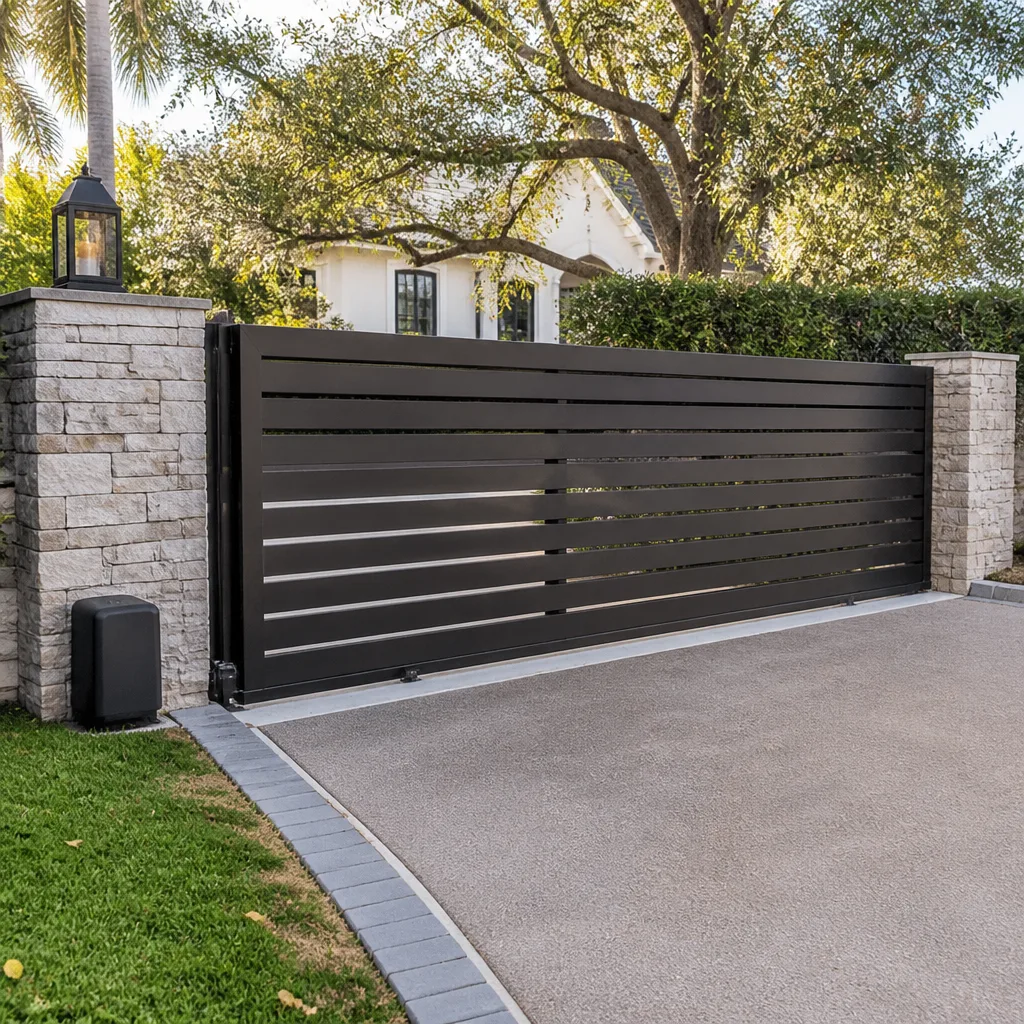 Sliding driveway gates
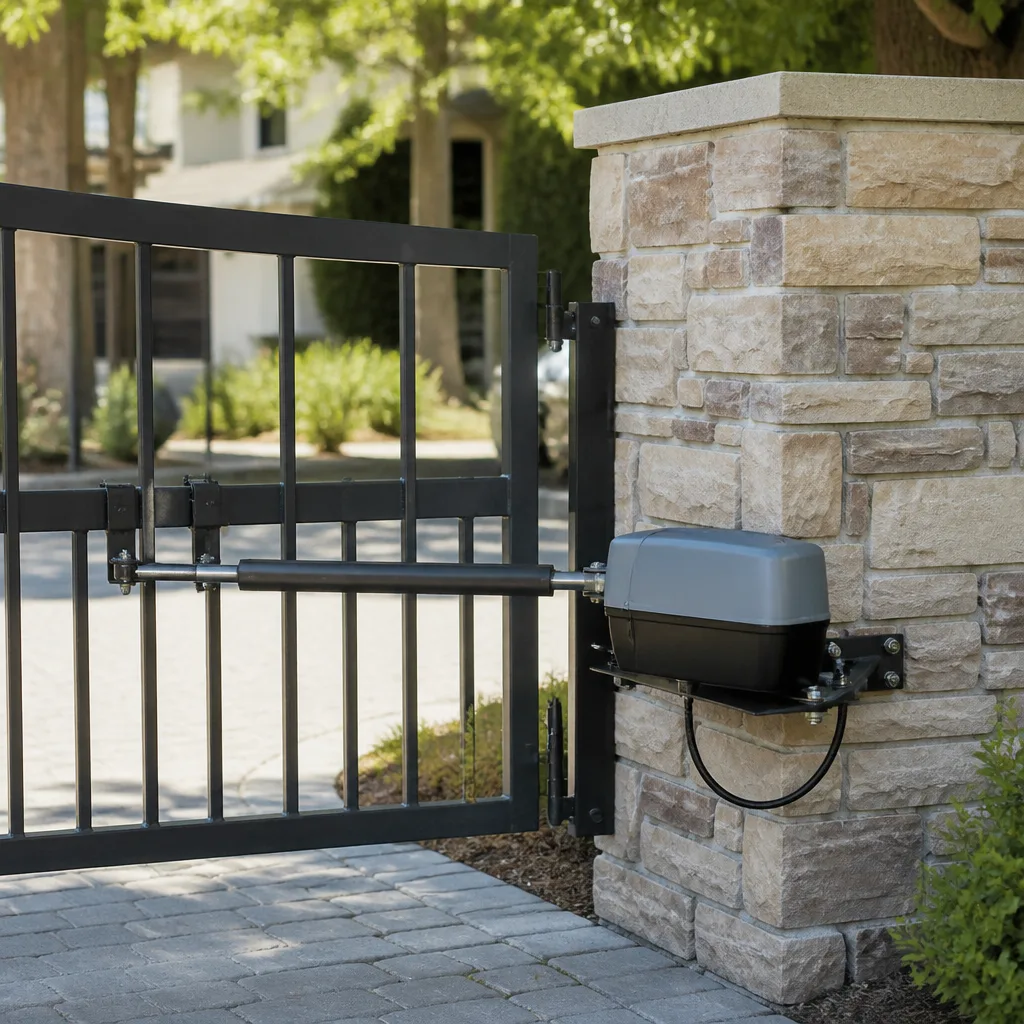 LiftMaster operators
Free on-site gate assessment - hinges, posts, and your LiftMaster or Nice gate operator checked before anything is quoted
The assessment is free and the quote is the invoice.
Get your free estimateDIY vs Professional Gate Repair: The Denver Homeowner’s Decision Guide
The most dangerous gate repair a homeowner attempts in Denver usually isn’t electrical. It’s spring tension adjustment on a counterbalanced swing gate, where stored mechanical energy can swing a heavy panel or snap hardware back at whoever is standing in the path. Most DIY advice online treats gate repair as one uniform skill, when it’s really four very different risk categories. This guide breaks repairs down by actual risk and system type, explains how Denver’s altitude changes what your test readings mean, and shows where a homeowner can legitimately save money by doing the diagnosis while handing off the dangerous work.
Quick Answer
About half of gate problems in Denver are safe for a careful homeowner to diagnose or fix: stuck latches, track debris, worn hinges, loose hardware, and physical obstructions. The other half involves stored mechanical energy, low-voltage wiring, control board logic, or structural panel weight, and those should go to a gate specialist. Knowing which category your problem falls into is the whole decision.
Styles & brands we work with
- Wrought iron
- Wood & steel frame
- Farm & ranch
- Sliding driveway gates
- LiftMaster operators
Table of Contents
- Categorizing Your Gate Problem by DIY Viability
- How Denver’s Elevation Changes Your Troubleshooting
- What Tools Each Repair Category Actually Needs
- Warranty and Insurance Consequences of DIY Repair
- The Middle Ground: Diagnose First, Hand Off the Work
- Operator and Control Board Failures
- What Should Never Be Attempted Alone
- Common Mistakes to Avoid
Categorizing Your Gate Problem by DIY Viability
Not all gate repairs carry the same risk. Before you pick up a single tool, categorize the problem. In our experience, this is the step homeowners skip most often, and it’s the step that determines whether the repair takes twenty minutes or turns into a much larger bill.
Here’s how gate problems break down in the Denver market:
- Category 1 – Safe and straightforward: Debris on or under the gate path, worn hinges on a light manual gate, loose bolts on a hinge plate, a sticking latch, cosmetic wear on panel paint or wood, or a gate that drags on pavement. Most of these can be handled with hand tools and a helper, with the gate still and blocked from moving.
- Category 2 – Requires electrical competence: Low-voltage operator wiring, fuse checks, battery replacement in solar-powered operators like Mighty Mule units, and continuity testing at the control board. If you don’t own a multimeter and know how to read one, stop here.
- Category 3 – Requires professional tools: Panel realignment, post anchor adjustment, roller and track replacement on slide gates, chain tension adjustment on chain-drive operators, and heavy hinge replacement. These need leverage, alignment tools, and often a second set of hands.
- Category 4 – Do not attempt: Counterbalanced swing gate spring adjustment, anything involving line-voltage wiring to the operator, structural post repair, and control board replacement where the wrong input can damage a proprietary system.
Category 1 is yours if you’re comfortable. Category 2 is a judgment call. Categories 3 and 4 belong to a gate specialist who does this every day and knows the failure patterns. For Gate Repair Denver work, we see the most homeowner-caused damage coming out of Category 4 attempts.
How Denver’s Elevation Changes Your Troubleshooting
Denver sits at high elevation, and that single fact changes how some equipment behaves. Online troubleshooting guides written for sea-level installations sometimes give the wrong diagnostic conclusion here, and homeowners end up replacing a part that wasn’t broken.
A few things shift when you work on gates at altitude:
- Solar-powered operators like Mighty Mule units often rely on a solar panel and battery combo. Panel efficiency and battery behavior can be less predictable in colder or high-altitude conditions, and a weak battery can look exactly like a dead control board in older guides written for warmer climates.
- Wooden gate panels in Colorado move more across seasons. Dry, cold air can shrink a gate panel or warp a frame slightly, and warmer months can swell it. A gate that sticks in one month may be perfectly aligned a few weeks later. That’s seasonal movement, not a broken hinge.
- Ground shift from freeze-thaw cycles affects post footing depth on gates that were installed shallow. A gate that suddenly drags or binds after a cold snap is often a footing issue, not a hinge failure.
- Motor strain shows up on heavy gate panels where a slightly misaligned track or a stiff hinge adds load. The operator may trip a breaker or reverse on its own, and the cause is mechanical, not the control board.
Denver’s dry air and temperature swings also affect outdoor seals on operator enclosures. A control box that lets in moisture and then freezes overnight can fail in a pattern that doesn’t match any sea-level troubleshooting chart. If the guide you’re following assumes a mild coastal climate, treat its conclusion as a starting point, not a verdict. That’s a big reason we ask a lot of questions before we send anyone out on a gate repair call in this city.
What Tools Each Repair Category Actually Needs
YouTube videos make most gate repairs look like a ten-minute job with a screwdriver and a wrench. That gap between what you see and what a repair actually needs is where most DIY attempts stall halfway through, leaving the gate stuck open overnight.
Here’s a realistic tool list by repair category:
- Category 1 (basic hardware): Socket set, adjustable wrench, screwdrivers (Phillips and flathead), a wire brush for debris, a level, and a helper to hold the gate in position. Add a can of penetrating oil for rusted bolts.
- Category 2 (electrical basics): Digital multimeter, insulated screwdrivers, wire strippers, electrical tape, and the operator’s manual. You also need to be able to identify low-voltage versus line-voltage terminals on your specific operator before you touch a wire.
- Category 3 (alignment and heavy hardware): Alignment bars, pry bars, heavy-duty clamps, a post level, a hammer drill if post anchors need adjusting, and a proper jack or support for heavy gate panels. You’ll also want a second person.
- Category 4 (do not attempt): Spring compression tools, torque specifications, and the experience to know when a counterbalanced gate is under unsafe stored energy. This is where the tool gap becomes a safety issue, not a convenience one.
The gap between a YouTube repair and a real repair isn’t usually about knowing what to do. It’s about having the right leverage tools, the safe support equipment, and a spare part on hand if something breaks mid-job. LiftMaster, FAAC, and BFT operators all have specific parts and torque specs that matter, and without them you can end up with a gate that moves but doesn’t stop reliably. If you’re not set up for it, it’s worth a call before you start.
Warranty and Insurance Consequences of DIY Repair
Most homeowners don’t think about warranty or insurance until after the fact. But on major operator brands, DIY repair can void coverage on the operator itself, and it can complicate a property claim if a failure causes damage.
Here’s what usually happens in practice:
- Operator warranty terms on brands like LiftMaster, FAAC, and BFT typically assume professional installation and service. A homeowner who opens the control box and replaces a board without documentation can run into pushback if a later failure gets claimed.
- Wooden and metal gate panel warranties from fabricators often assume standard hardware was used and only a qualified installer altered the gate structure. Re-drilling a hinge plate in the wrong spot can void that coverage.
- Property insurance is rarely built for the idea that a homeowner’s own repair caused a gate to fail. If a gate panel comes off a track or a spring lets go and the result is damage to a vehicle or a fence, the insurer’s first question is who did the work.
- Subsequent professional repair can be trickier if a homeowner has already been inside the control board. A technician walking into a system where someone else has changed wiring or swapped a part is diagnosing two problems, not one.
Denver has a wide range of homeowners: some on large properties with long gate runs and multiple operators, and some in town where every repair is on a single-car driveway gate. In either case, keeping the service history with a gate specialist is worth more than the few dollars saved on a DIY attempt. If you’re unsure whether your repair touches warranty, ask before you touch anything.
The Middle Ground: Diagnose First, Hand Off the Work
Not every decision is binary. There’s a real middle ground where a homeowner does the safe diagnostic work, sources the right part, and hands off only the category 3 or 4 portion. That can reduce the total bill significantly without the risk.
Here’s how that division of labor looks in practice:
- Write down what the gate does. Does the operator click but not move? Does the gate move and then reverse? Does the gate stick in one spot along its travel? Does the control board show a fault light? Each symptom points to a different subsystem.
- Rule out the obvious mechanical causes yourself. Check for debris on the track or in the swing path, confirm the batteries in a solar-powered Mighty Mule or similar operator are charged, and check that nobody has flipped a manual release lever.
- Photograph the control board. A clear photo, plus the operator model number, gives a specialist enough to tell you whether it’s a board issue, a motor issue, or a wiring issue before anyone drives out. That saves diagnostic time on-site.
- Source the exact replacement part if it’s simple. A fob battery, a limit switch, a photocell, or an entry keypad can often be replaced by a homeowner. The operator manual will specify the exact part.
- Hand off the final step. Once the diagnosis points to a board, a spring, a torque spec, or a line-voltage run, that’s where a gate specialist does the work. You’ve done the field report, and they do the repair.
We’ve seen this split work extremely well for homeowners comfortable with basic maintenance. A homeowner with a Mighty Mule solar operator who can confirm a dead battery and replace it never needs us on site. A homeowner with a LiftMaster or BFT system showing a fault light who sends a clear photo of the fault code and the model number gets a much sharper estimate. A homeowner with a spring problem doesn’t save anything by getting further involved than a photo of the panel. For electric gate repair in any of these cases, the diagnostic prep is where the savings live.
Operator and Control Board Failures
Operator problems are the most common category of call we get. In Denver, exactly which operator causes the most trouble depends on the property, but the failure pattern is usually one of a handful:
- Operator runs but gate doesn’t move. Usually a stripped gear, a loose chain or belt, or a broken drive sprocket. That’s a mechanical failure inside the operator, and it needs parts.
- Operator doesn’t respond at all. Dead battery, tripped breaker, blown fuse, bad wiring connection, or a control board failure. The photo-and-model-number approach above narrows this fast.
- Gate opens but won’t close. Often a safety sensor issue – a misaligned photocell, a damaged safety edge, or dirt on a lens. LiftMaster and FAAC systems both use safety sensors, and a sensor that isn’t reading correctly will block a close every time for safety reasons.
- Gate reverses at the same point each time. Obstruction detection tripping on something the operator thinks is there. Often a stiff hinge, a track bump, or seasonal panel movement.
- Remote stopped working. Usually the fob battery or the receiver lost its programming. Re-pairing the remote is often a Category 1 task if the operator manual covers it.
Where DIY goes wrong is when a homeowner replaces a control board before confirming the operator was actually the failure point. A board swap that doesn’t fix anything usually means the real problem was mechanical or in the wiring, and the new board is now an expensive spare. If the operator is a name-brand system – LiftMaster, FAAC, BFT, or one of the other major brands – a gate specialist who works on that brand can usually diagnose remotely with the right photos and model info.
What Should Never Be Attempted Alone
This is the section we want you to read twice. Some gate repairs have real injury potential, and this is where we tell people plainly to stop.
Four categories of gate work should never be attempted by a homeowner:
- Counterbalanced swing gate spring adjustment. A counterbalanced swing gate holds significant stored mechanical energy in its springs. If the gate isn’t properly blocked and supported before any adjustment, a spring letting go or a tension change can drive the gate panel fast and hard. That’s how serious injuries happen. Do not attempt this, even with a helper.
- Line-voltage electrical work. Anything past the low-voltage control terminals of the operator on a hardwired gate system involves mains voltage. That work has real shock and fire risk, and it’s not a “watch the video first” job.
- Structural gate post repair or replacement. A gate post carries the weight of the entire gate panel. Pulling a post on a heavy gate without proper support and footing depth knowledge is asking for the gate to come down.
- Slide gate track and roller replacement on heavy gates. A heavy slide gate panel that comes off its track is a crush hazard. This needs proper lifting equipment and a second trained person.
For anything on that list, call a professional. Working on a gate is not the same as working on a car or a door; the stored energy is real and the panel weight is real. In our experience across Denver, the repairs that go badly wrong are almost always a homeowner attempting one of the four above because a video made it look simple.
Common Mistakes to Avoid
- Adjusting springs without blocking the gate first. A counterbalanced swing gate can move unpredictably the moment a spring is touched. Block and support the gate before any spring work, and honestly, don’t do spring work yourself.
- Replacing a control board before confirming the mechanical side is healthy. A board swap is expensive and often unnecessary. Confirm the gate moves freely by hand (with the operator disengaged and power off) before blaming electronics.
- Following sea-level troubleshooting guides on a high-altitude setup. Denver’s climate and elevation change how batteries, seasonal wood movement, and post footings behave. A guide written for a coastal climate may point you at the wrong part.
- Using a random part in place of a factory part. Operators like LiftMaster and FAAC use specific hardware. A “close enough” substitute can damage the drive mechanism, void the warranty, and cost more to fix later.
- Ignoring seasonal panel movement. A gate that sticks in the winter and swings free in summer is telling you something about panel expansion. Fixing it in the sticky season can leave it too loose in the loose season.
- Pulling a gate post without proper equipment on a heavy gate. Post footings in Denver can be deeper or shallower than expected due to freeze-thaw patterns, and a heavy gate coming down is a real injury risk.
- Not documenting what you tried. If you call us after a failed DIY attempt, the more you can tell us about what you did and what changed, the faster we diagnose it. A photo of the control board before and after is genuinely useful.
See the difference
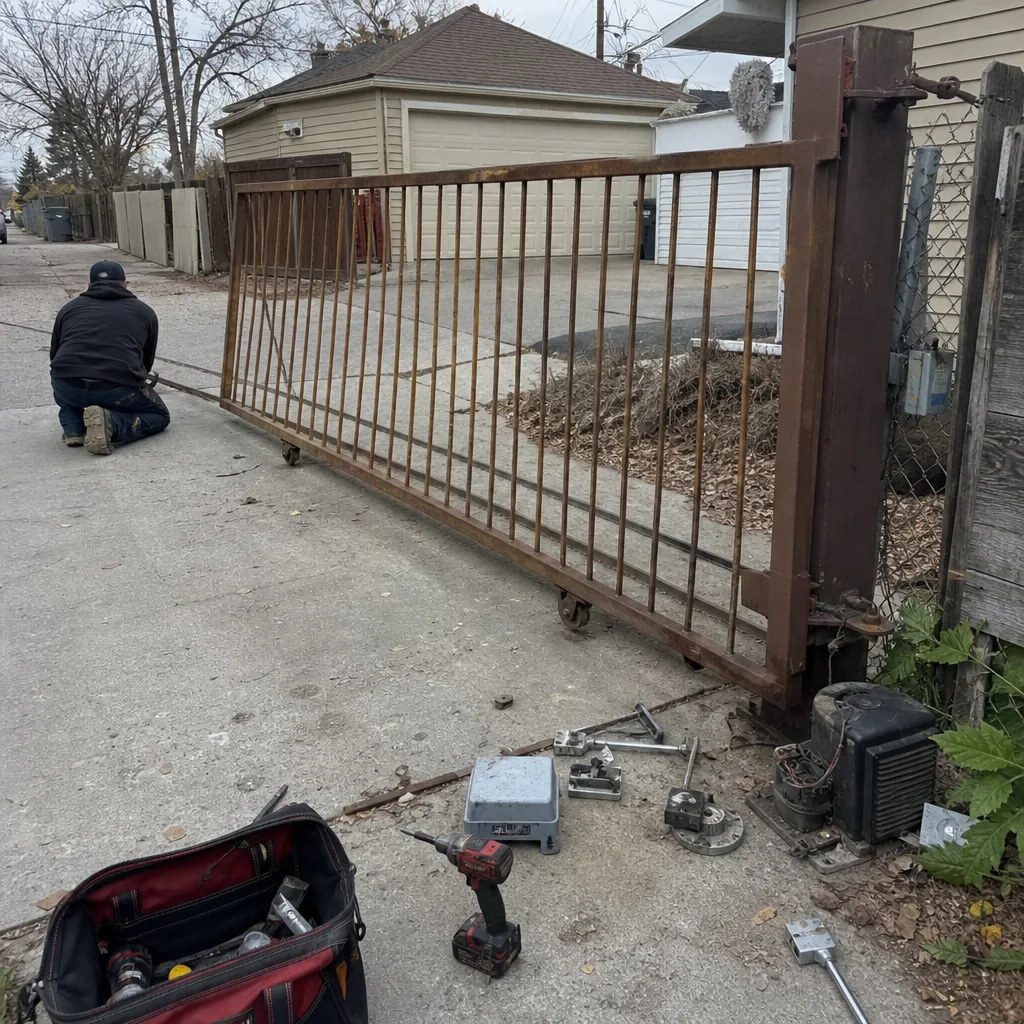 Before
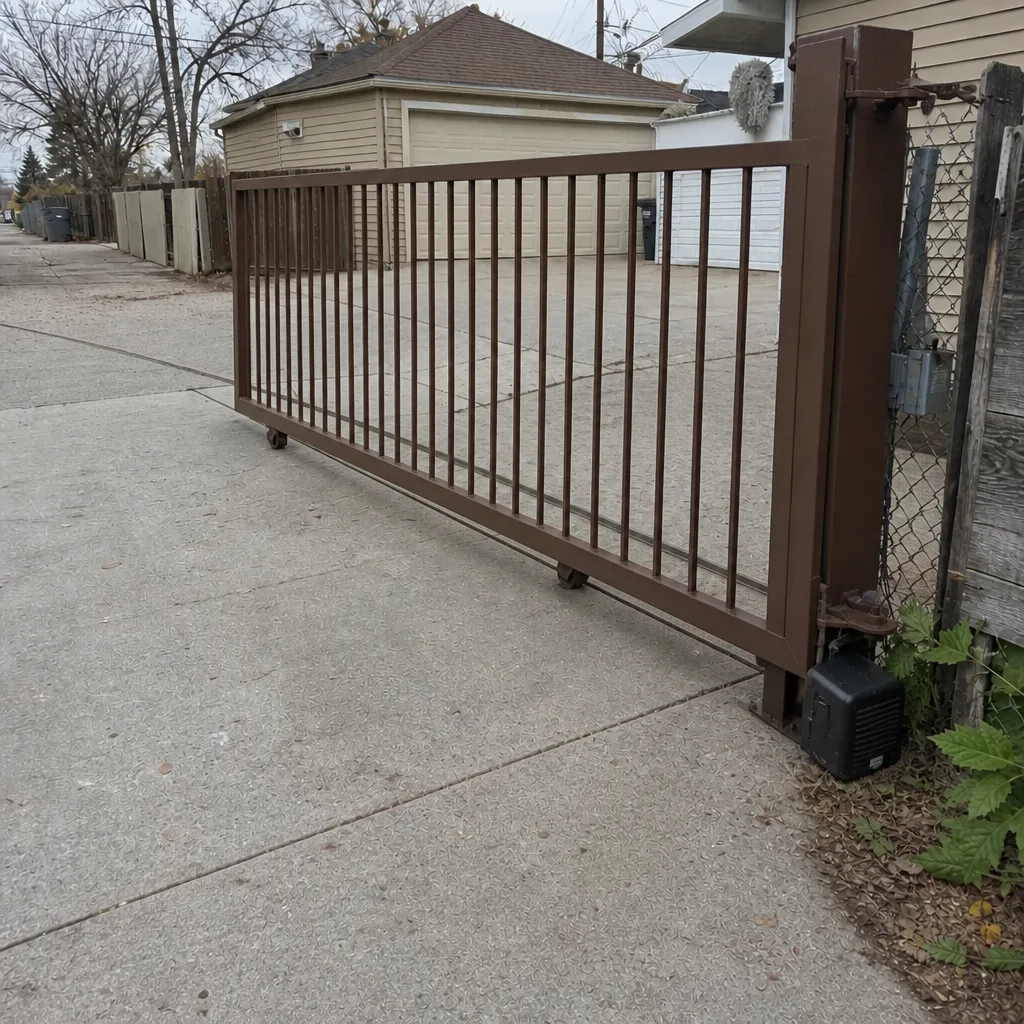 After
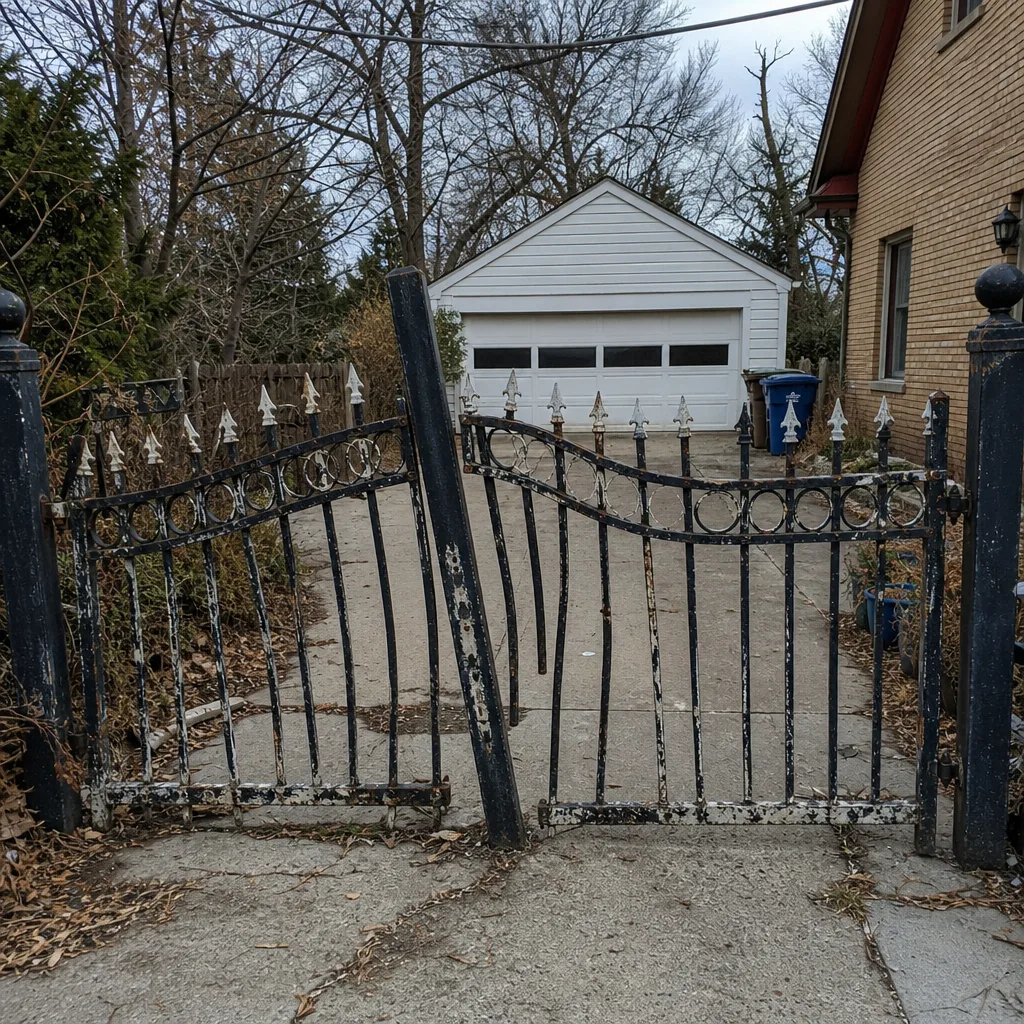 Before
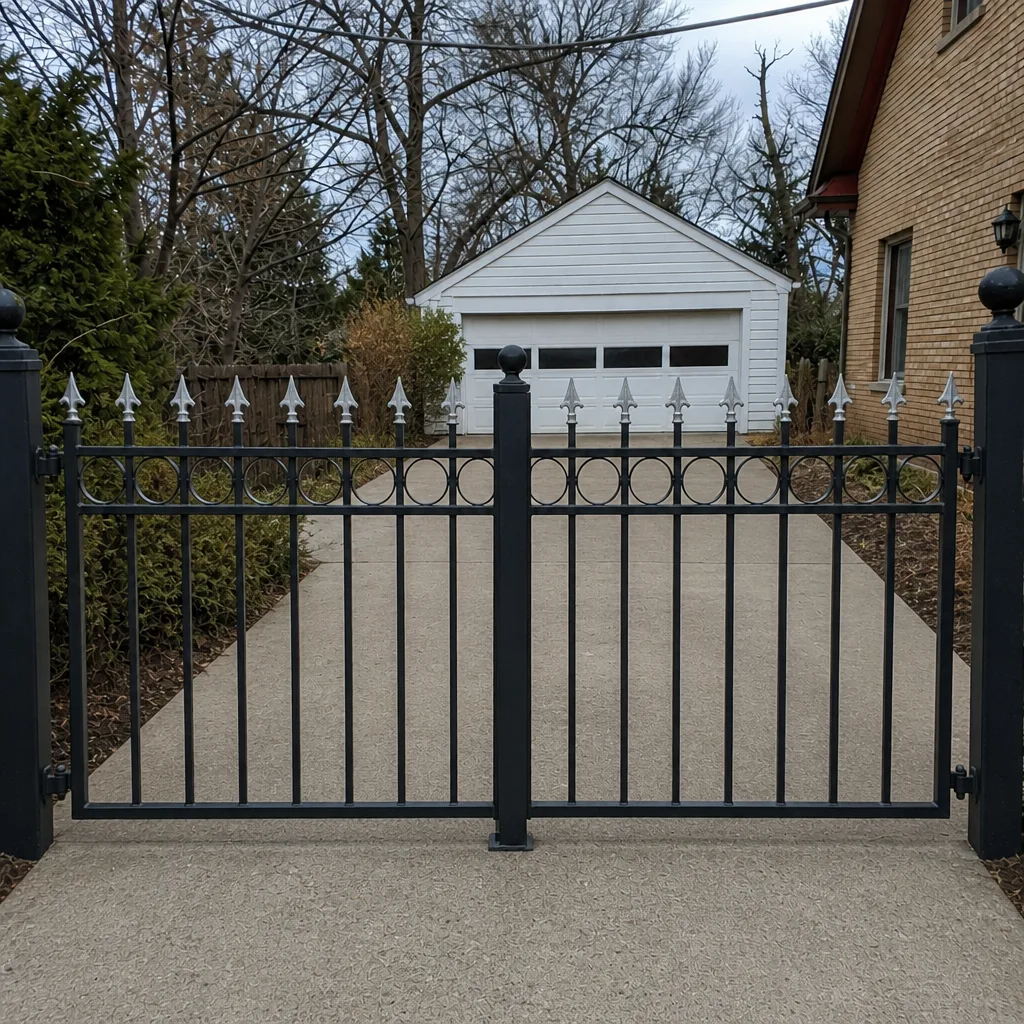 After
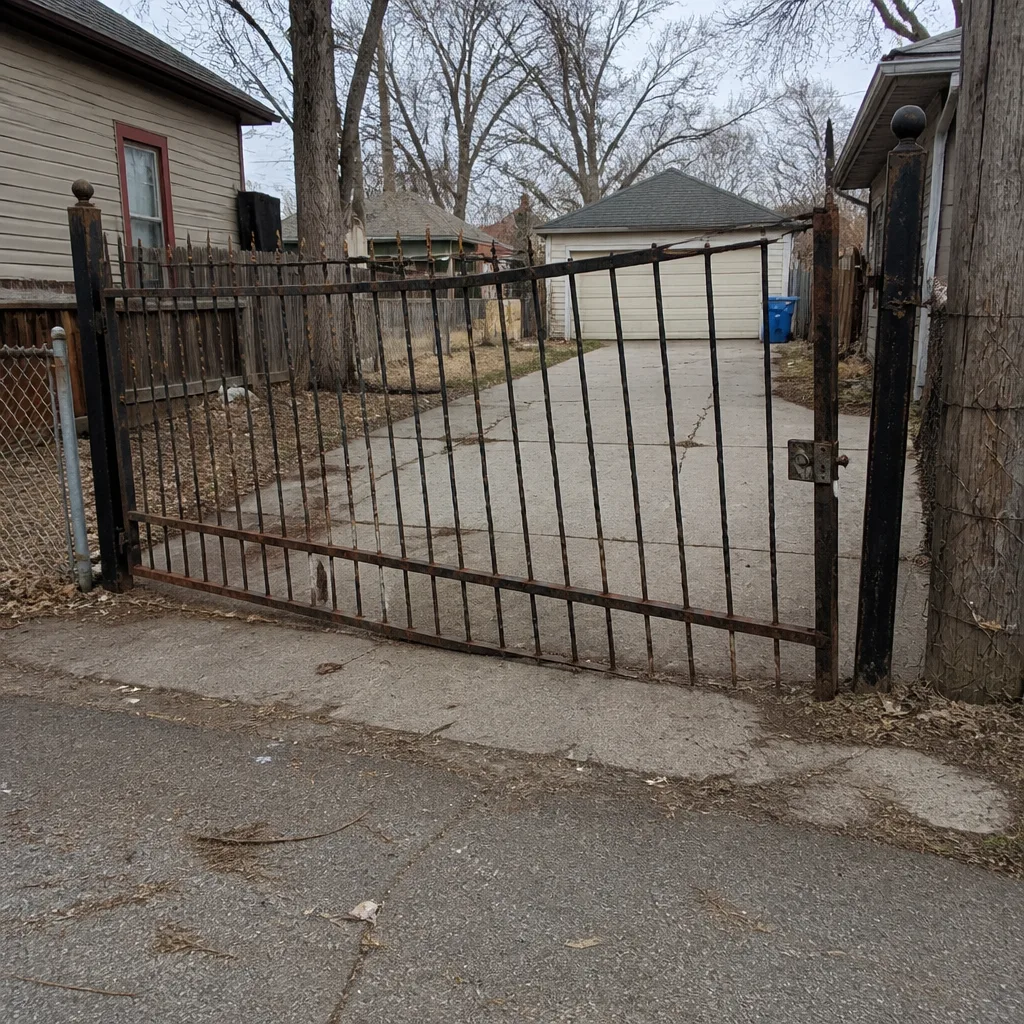 Before
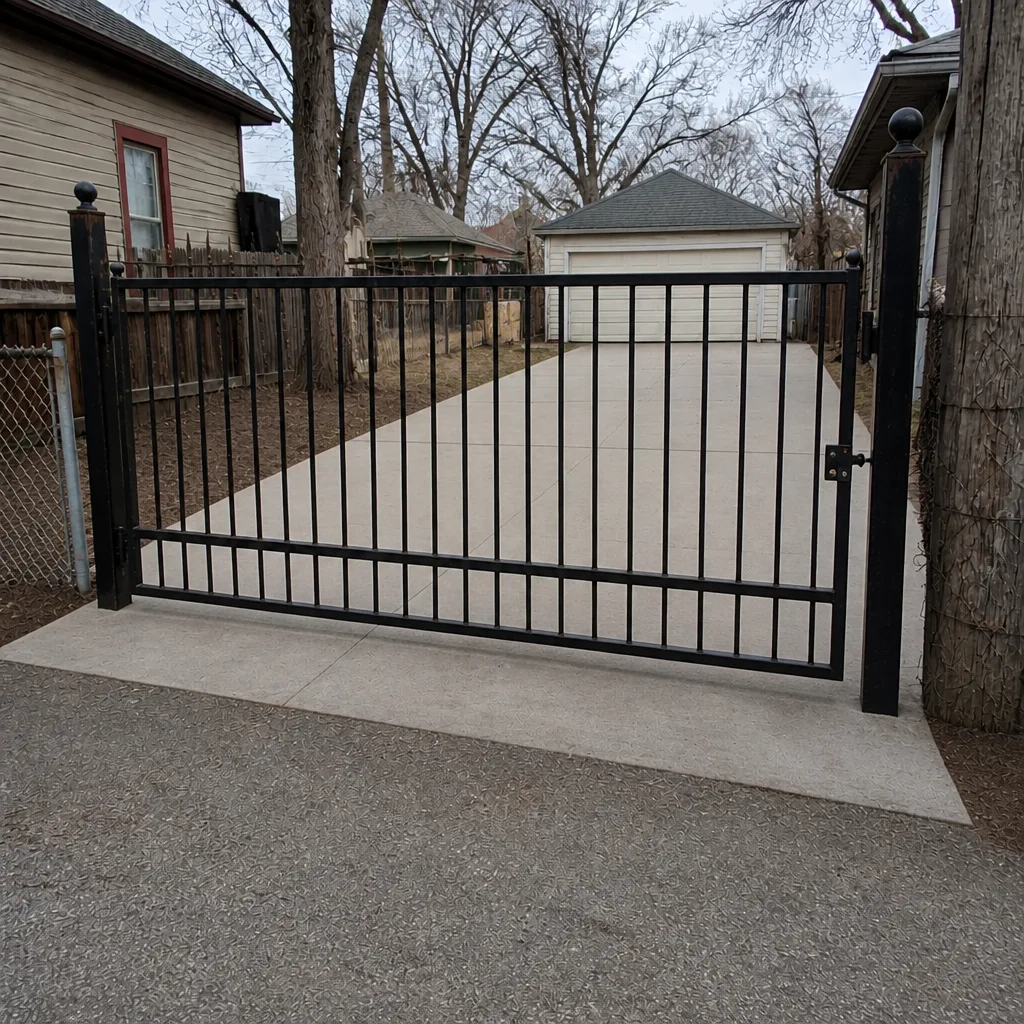 After
When to Call a Professional
Call a professional when the repair involves spring tension, line-voltage wiring, control board replacement, panel realignment, post footing work, or anything on a heavy gate panel that could fall. Also call when the DIY attempt has already happened and the gate still isn’t right; a specialist walking into a partially finished job is still faster than you continuing to chase the fault. The safest rule of thumb: if the repair requires the gate to be under stored tension or under structural weight, that’s the line.
Gate Repair Denver offers free estimates in Denver. Call (855) 677-8291. We answer 24/7. Fast dispatch from 7am to 7pm, Sunday through Friday. We’re a gate-only specialist: repair, electric gate repair, and installation, working on LiftMaster, FAAC, BFT, Linear, Viking, Ghost Controls, DoorKing, Elite, and Mighty Mule systems. We work on the brand you already own.
Frequently Asked Questions
DIY gate repair is safe for some problems and not others. Sticking latches, loose hinges, worn hardware, debris on the track, and manual gate panel adjustments with proper support are all reasonable homeowner tasks. Spring adjustment on counterbalanced swing gates, line-voltage wiring, and any work on heavy slide gates should go to a professional. When in doubt, treat it as a professional job.
Spring tension adjustment on a counterbalanced swing gate is the most dangerous. Those springs hold significant stored mechanical energy, and a gate that isn’t blocked and supported can move suddenly and with force. There is no safe DIY version of this repair. Call (855) 677-8291 for an exact quote on spring-related work – estimates are free.
Yes, in two main ways. High-altitude conditions make solar-powered operator performance less predictable, and dry air with big seasonal swings moves wooden gate panels more than coastal guides assume. A gate that sticks in winter may swing free in summer. Following a sea-level guide too literally can send you chasing the wrong part.
You can physically replace a control board, but we don’t recommend doing it unless you’re confident the board is the actual failure. Many “dead board” symptoms are really dead batteries, bad wiring, or a mechanical failure inside the operator. Confirm the gate moves freely by hand with power off before blaming the board. Call (855) 677-8291 for an exact quote if you want a diagnosis first – estimates are free.
Often, yes. Most operator warranties on brands like LiftMaster, FAAC, and BFT assume professional installation and service. A homeowner opening the control box and swapping parts without documentation can create real complications if a later failure gets claimed. If the operator is still under warranty and something has gone wrong, check the warranty terms before you touch it.
Disengage the operator and try to move the gate by hand. If the gate moves freely and smoothly, the problem is likely electrical or in the operator. If the gate binds, drags, or resists at a specific point, the problem is mechanical. That one check solves most misdiagnosis. Call (855) 677-8291 to talk it through – estimates are free.
Sometimes, yes. If your repair is Category 1 or 2, we can point you to the right part and the right manual. If it’s Category 3 or 4, we’ll tell you plainly that it needs a specialist. We’d rather have you do the safe parts yourself than risk a dangerous one. Call (855) 677-8291 to talk through your specific case.
What does a gate repair on a Denver property usually involve?
A visit starts with a full diagnosis of the gate and operator, confirms the failure category, and quotes a price before any work begins. Once the estimate is written and agreed, the repair happens. On electric gates, that includes a wiring and safety sensor check. On manual gates, that includes hinge and post integrity checks. Call (855) 677-8291 for an exact quote – estimates are free.
The Bottom Line
The DIY vs professional question for gate repair in Denver comes down to four categories: what’s safe, what needs electrical skill, what needs proper tools, and what should never be attempted alone. Category 1 repairs are yours if you’re comfortable. Categories 2 and 3 are a judgment call that depends on your tools and confidence. Category 4 is a firm never; spring adjustment, line-voltage wiring, structural post work, and heavy slide gate repairs are professional territory. Denver’s altitude and climate add a local wrinkle to troubleshooting, and warranty considerations make a specialist service history worth keeping. Do the safe diagnosis yourself; hand off the risky work.
Call (855) 677-8291 for a free estimate on any gate problem in Denver. We answer 24/7. Fast dispatch from 7am to 7pm, Sunday through Friday. Whether your opener stopped responding or your gate won’t move at all, we diagnose the problem, quote the price before any work begins, and fix it. From manual swing gates to fully automated electric systems, we’re the gate-only specialist for Denver.
Written by the team at Gate Repair Denver, serving Denver since 2015.