
Last updated November 14, 2026
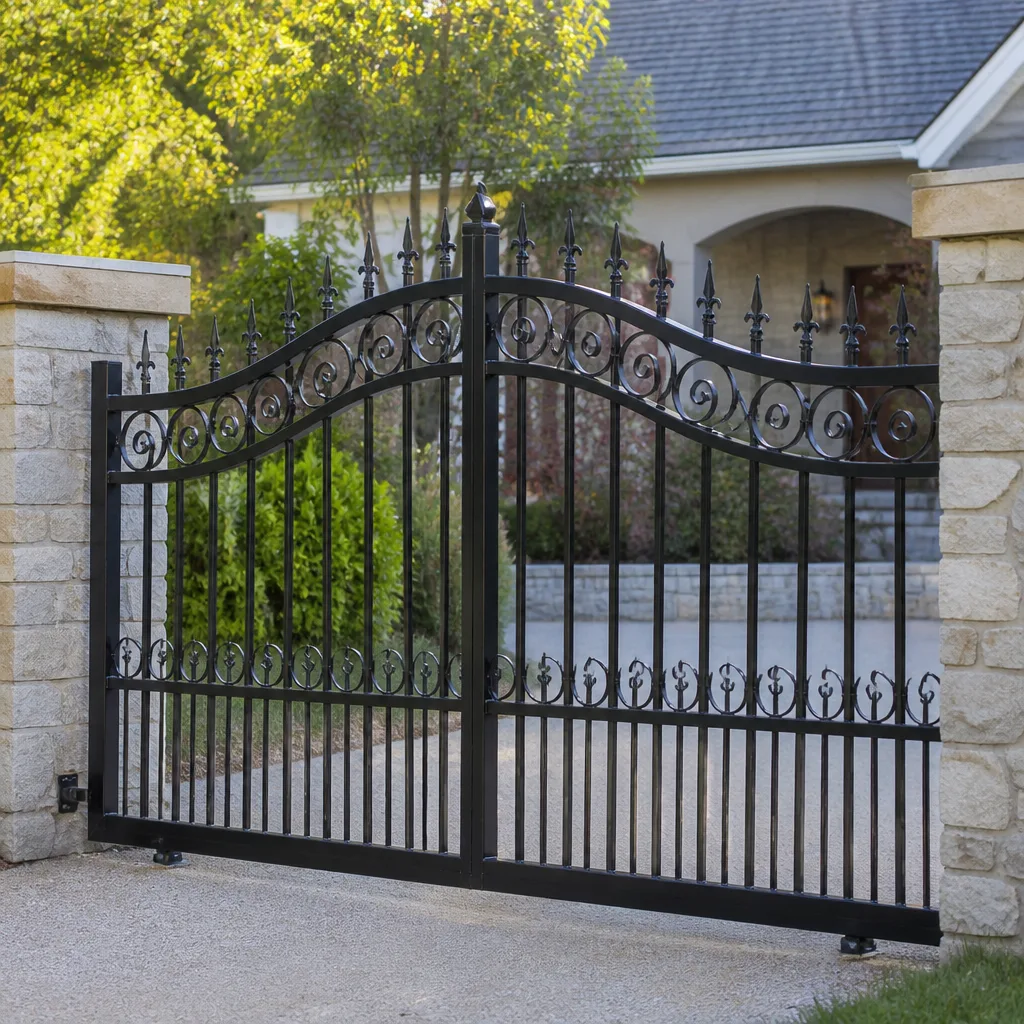 Wrought iron
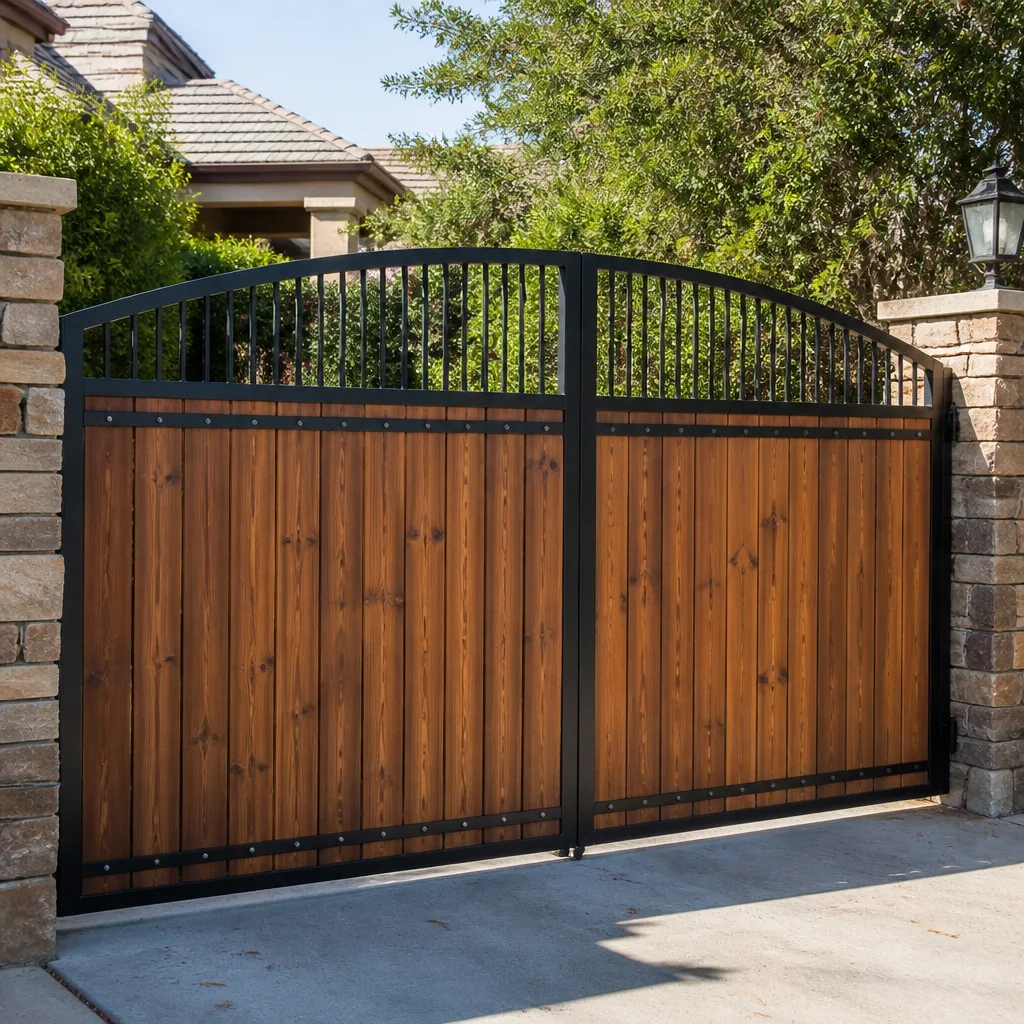 Wood & steel frame
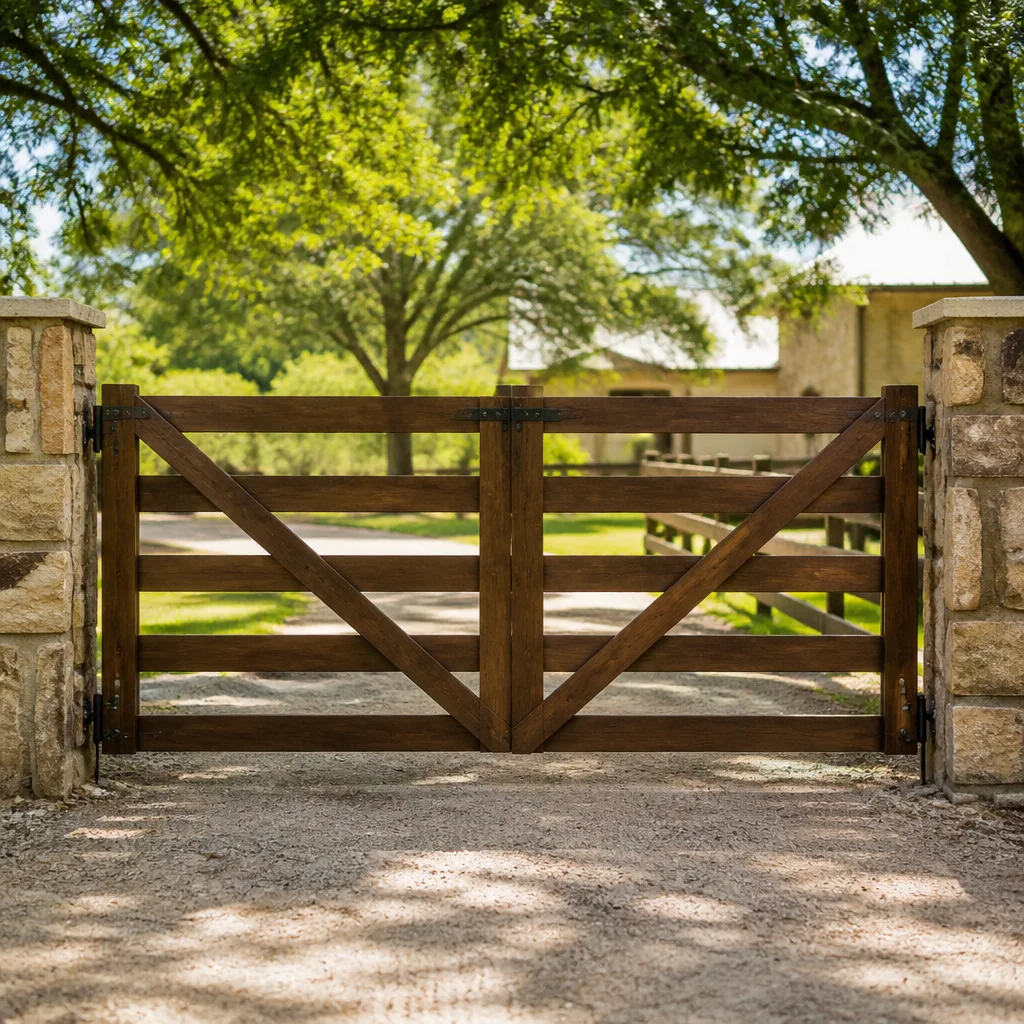 Farm & ranch
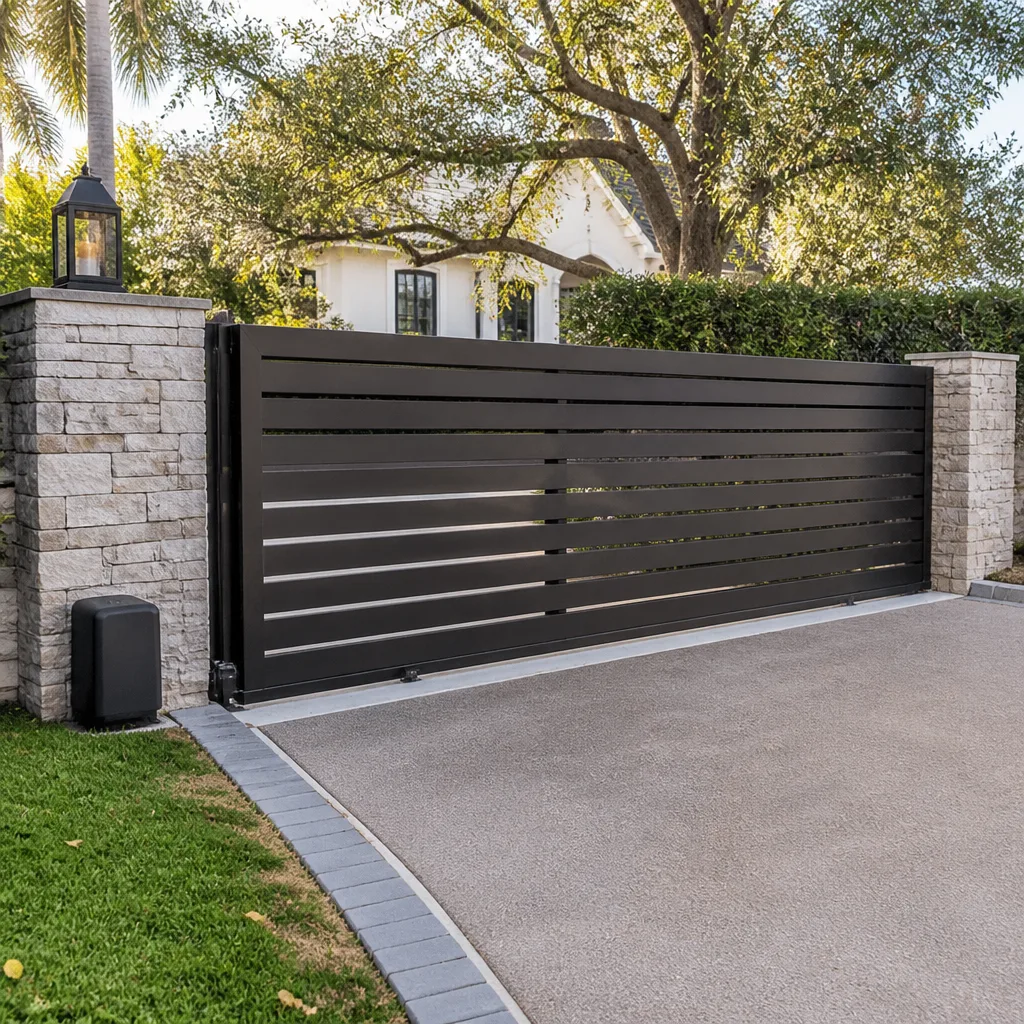 Sliding driveway gates
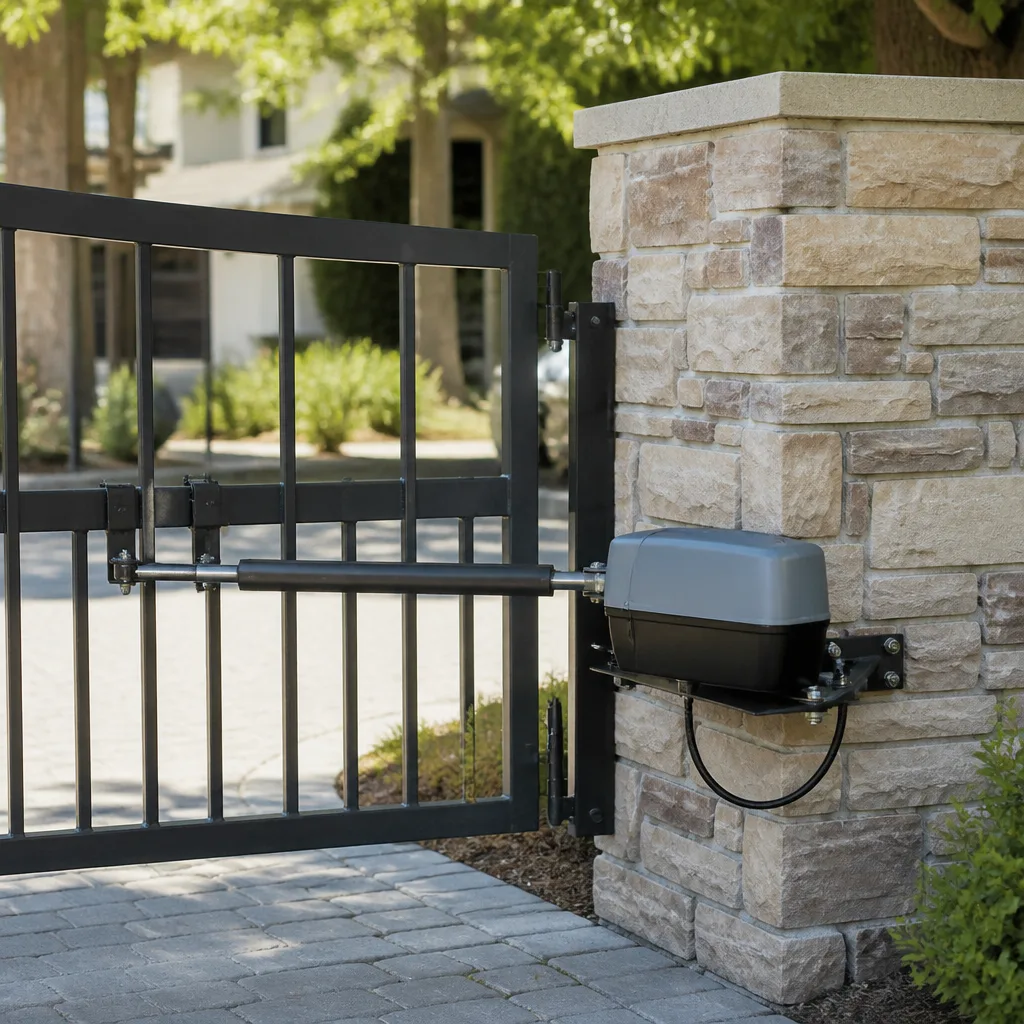 LiftMaster operators
Free on-site gate assessment - hinges, posts, and your LiftMaster or Nice gate operator checked before anything is quoted
The assessment is free and the quote is the invoice.
Get your free estimateThe Complete Guide to Gate Repair in Denver
Denver’s 300+ days of sunshine sounds great until you realize UV degradation destroys gate wiring insulation and plastic limit switches faster here than in cloudier, coastal cities. Most repair guides ignore climate entirely. They treat every gate failure as a generic mechanical problem, which is why so many repairs in Denver fail again within a season. This guide maps each component of a gate system to the specific conditions that stress it most in Denver: clay soil, freeze-thaw cycles, intense sun, and neighborhood HOA requirements. You’ll learn how to tell operator problems from structural ones, how to read a gate’s history from visual inspection, and when a repair will actually last.
Quick Answer
Gate repair in Denver usually involves one of three separate systems: the operator and its electronics, the hinge and hardware, or the gate structure itself. Because Denver’s clay-heavy soil shifts with moisture and its freeze-thaw cycles are hard on underground loop detectors, misdiagnosing which system is failing is the most common cause of repeat service calls. A proper repair addresses the root cause, not just the symptom, and a gate-only specialist can usually identify the failing system on the first visit.
Styles & brands we work with
- Wrought iron
- Wood & steel frame
- Farm & ranch
- Sliding driveway gates
- LiftMaster operators
Table of Contents
- Why Gates Fail Differently in Denver
- Operator, Hardware, or Structure: The Three Systems
- How Denver’s Clay Soil Causes Post Heave
- Freeze-Thaw and Loop Detector Failure
- UV Damage to Wiring and Plastic Components
- HOA Gate Specs by Denver Neighborhood
- How to Read a Gate’s Failure History
- When to Repair and When to Replace
Why Gates Fail Differently in Denver
A gate in Denver lives through conditions a gate in Seattle or Miami never sees. The city sits at high altitude with intense sun exposure, wide temperature swings between day and night, and soil that expands and contracts dramatically with moisture. Each of those factors attacks a different part of the gate system. Sun exposure ages the operator’s plastic components and wiring insulation. Temperature swings work on the soil, which moves posts and undermines concrete footings. The combination means a gate in Denver may fail in ways that look mechanical but are actually environmental.
We’ve worked on gates across Denver long enough to see the patterns repeat. A gate that opens fine in July but drags in January is showing you a soil problem, not an operator problem. A gate whose remote works intermittently in late afternoon is often showing you UV damage to a receiver wire, not a failing remote. When your gate opener stops responding, the instinct is to replace the opener. Most of the time that’s the wrong first move. The failure is somewhere upstream, and a gate-only technician diagnoses it faster because gate systems are all they see.
This matters for cost. Replacing a working operator because the actual fault was a misaligned post means paying twice: once for the unnecessary operator, and again when the post problem finally gets fixed. Understanding the difference between environmental and mechanical failure is where any repair conversation in Denver should start.
Operator, Hardware, or Structure: The Three Systems
Every gate problem traces to one of three systems. Confusing them is why so many service calls get wasted. A technician who arrives expecting an electrical fault and finds a structural one has to schedule a second visit. A gate-only specialist can usually tell which system is at fault before the truck is even parked, just from watching the gate move.
Operator and access control. This is everything electronic: the motor, the control board, the receiver, the safety edges, the loop detector, and the keypad or remote. Symptoms: the gate doesn’t respond to commands, opens partway and stops, reverses for no reason, or the remote works only at close range. Brands matter here. We work on Ghost Controls, DoorKing, Elite, and Mighty Mule systems among others, and each has its own quirks for diagnosing a board versus a sensor.
Hinge and hardware. This is the mechanical connection between gate and post: hinges, rollers, tracks, latches, and the brackets that hold everything together. Symptoms: the gate sags, scrapes the ground, swings unevenly, or the latch no longer lines up. Hardware problems often mimic operator problems because a dragging gate makes the motor work harder and can trigger a safety reversal.
Structural. This is the gate panel, the posts, and the concrete footings. Symptoms: the gate doesn’t sit square in its opening, posts lean, or the gate twists when it opens. Structural problems are the ones Denver’s soil causes most often, and they’re the ones most likely to be misdiagnosed as operator failures.
If you’re unsure which system you’re dealing with, watch the gate open and close from a distance. A gate that moves smoothly but doesn’t respond to commands points to the operator. A gate that moves roughly or drags points to hardware or structure. That single observation saves a lot of guesswork.
How Denver’s Clay Soil Causes Post Heave
Denver sits on expansive clay soil. When the clay gets wet it swells; when it dries out it shrinks. Over the course of a year, that swelling and shrinking moves the ground around a gate post by small amounts, and those small amounts add up. A post that was set perfectly plumb can end up leaning a fraction of an inch by spring, which is enough to throw a gate out of alignment and cause it to bind or scrape. This is called post heave, and it’s the single most common structural cause of gate problems in the Denver metro.
The repair for post heave depends on the severity:
- Minor heave. The gate still operates but has started to scrape or drag. Adjusting the hinges and hardware can restore clearance, but this addresses the symptom and usually needs repeating as the soil shifts again.
- Moderate heave. The post has moved enough that hinge adjustment no longer works. Resetting the post with a deeper footing addresses the root cause and is the repair that lasts through multiple freeze-thaw cycles.
- Severe heave. The post or the concrete footing has cracked or tilted significantly. In this case replacement is usually the honest answer, because patching a failed footing just delays the next failure.
The key question to ask any repair technician is whether they’re addressing the soil or just the gate. A hinge adjustment is fast and cheap, but if the post has moved, the misalignment comes back. For a repair that lasts, ask specifically what’s happening with the footing and how they’ll stabilize it. This applies whether you have a manual swing gate or a fully automated electric system.
Freeze-Thaw and Loop Detector Failure
Denver’s freeze-thaw cycle is the number one cause of underground loop detector failure in the metro. A loop detector is the wire coil buried in the driveway that tells the automated gate a vehicle is waiting, so the gate knows to open or to stay open. The wire sits in the ground through repeated cycles of freezing at night and thawing during the day. Moisture gets into the saw cut, freezes, expands, and works the wire until it breaks or the insulation fails. A loop that worked perfectly all summer often stops responding by mid-winter.
Symptoms of a failing loop detector:
- The gate won’t open for a vehicle but opens fine from a remote or keypad.
- The gate opens and then closes immediately, as if no car were there.
- The gate stays open when it should close, or refuses to open when a vehicle is present.
- Intermittent behavior that’s worse in cold or wet weather.
A proper loop repair starts with testing the loop with a meter to find where the break actually is, not just replacing the detector board and hoping. If the break is in the saw cut, the repair means clearing the failed section, splicing properly, and resealing the cut so water can’t get back in. A repair that skips the resealing will fail again the next time temperatures drop below freezing. This is exactly the kind of job where a generalist rushes and an electric gate repair specialist takes the time to do it right.
UV Damage to Wiring and Plastic Components
Denver’s sunshine is hard on gate systems in ways that don’t show up on a diagnostic checklist. The UV exposure at this altitude breaks down plastic over years, and the parts most affected are the ones that matter most: wire insulation, limit switches, connector housings, and the plastic enclosures that protect control boards. When insulation cracks, moisture gets in, and the intermittent faults start. A limit switch that’s gone brittle can fail without warning, and the gate stops mid-travel.
The components most vulnerable to UV damage on a Denver gate:
- Low-voltage wiring runs that are exposed to direct sun, especially where the insulation has aged.
- Plastic limit switches and the cams that trip them.
- Control board enclosures and the gaskets that seal them.
- Safety edge rubber, which hardens and cracks faster under intense sun.
- Remote receiver antennas and the plastic housings that protect them.
When we diagnose an intermittent electrical fault, we look at the wire runs before we look at the board. A control board that’s fine but connected to sun-cracked wiring will throw the same faults as a failing board, and replacing the board won’t fix it. This is where gate-only experience pays off: we’ve seen enough sun-damaged systems to know what to check first. The fix is usually replacing the damaged wire run or component, not the entire operator.
HOA Gate Specs by Denver Neighborhood
If you live in an HOA community in the Denver metro, your gate repair may be constrained by rules you didn’t know existed until a repair ran into them. HOAs often specify gate color, material, and style, and some have rules about the type of operator and access control that’s allowed. This matters most when a structural repair or a component replacement requires a part that doesn’t match the approved spec. Replacing a gate panel or an operator housing with one that doesn’t match the HOA’s approved appearance can mean ordering it twice.
Neighborhoods where HOA gate specs are most likely to affect a repair:
- Stapleton / Central Park. Established HOA design standards with defined gate and fence materials.
- Green Valley Ranch. Active HOA oversight on gate appearance and access control at community entrances.
- Highlands Ranch. Design review requirements that can touch gate and fence replacement.
- Lone Tree. HOA and metro district rules that often run alongside city permitting.
- Castle Pines. Neighborhood design standards that extend to gate hardware and operator enclosures.
Before any repair that involves replacing a visible component, check with your HOA. If a repair is inside the operator housing or underground, the HOA usually isn’t involved. If it’s a gate panel, a post, or an operator housing visible from the street, it likely is. Ask the repair company whether they’ve worked with HOA specs before; a gate-only specialist usually has.
How to Read a Gate’s Failure History
A gate tells you its history if you know what to look for. Before we touch anything, we walk around the gate and read the clues. This is the diagnostic logic a specialist uses on the first arrival, and it’s the same logic you can use yourself to describe the problem accurately when you call.
What to look for on a visual inspection:
- Scrape marks on the ground under the gate. The gate is sagging, likely from post heave or worn hinges. This is a structural or hardware problem, not an operator one.
- Uneven gaps between the gate and the posts. The gate isn’t sitting square. Same cause: post movement or a failed footing.
- Rust at the base of the posts. Water is pooling around the footing, which means the soil is staying wet and the footing is being stressed.
- Cracked or brittle wire insulation. UV damage. Electrical faults are likely, even if they haven’t shown up yet.
- Worn or bent hinges and rollers. The hardware is taking more load than it should, often because the gate is out of alignment.
- A gate that moves smoothly on manual release but fails on the operator. This points to the operator or the sensors, not the gate itself.
- A gate that drags even on manual release. This points to hardware or structure, and running the operator against a dragging gate will eventually damage it.
Take a photo of what you see and have it ready when you call. Describing what’s dragging, scraping, or not responding cuts the diagnosis time and usually gets you an accurate estimate faster. If you’re not sure, note whether the problem is worse in cold weather, wet weather, or after a long stretch of dry days. The weather pattern often points straight to the system at fault.
When to Repair and When to Replace
The repair-or-replace decision usually comes down to the state of the three systems. If the operator and access control are in working order and the structural problem is a single post, repair makes sense. If the operator is failing, the wiring is sun-damaged, and the posts have all moved, replacement is usually the better investment. The middle case is the hard one: an older operator on a structurally sound gate. In that situation, replacing the operator and keeping the gate is often the right call, because the gate itself is the expensive part.
Age alone shouldn’t drive the decision. A well-maintained gate can last much longer than its operator, and an operator can outlast a gate that’s been through several winters of soil movement. What matters is the condition of each system and whether the repair addresses the root cause. A repair that fixes the symptom but not the cause just delays the next failure. When we recommend replacement, it’s usually because the repair would cost a significant fraction of replacement and wouldn’t last the same number of years.
Our gate repair work covers both directions: fixing what can be fixed and replacing what shouldn’t be patched. No pressure either way. The estimate lays out what’s wrong and what each option costs, and the decision is yours.
Common Mistakes to Avoid
- Replacing the operator when the fault is structural. If the gate drags or binds, the operator is doing extra work and may shut down on a safety. A new operator on a misaligned gate will fail in the same way the old one did.
- Adjusting hinges to fix post heave. Hinge adjustment buys time, but if the post has moved, the gate will go out of alignment again with the next soil shift. Ask whether the footing is being addressed.
- Skipping the loop detector reseal. A loop repair that doesn’t reseal the saw cut lets water back in, and the loop fails again the next time temperatures freeze.
- Ignoring UV damage to wiring. Sun-cracked insulation causes intermittent faults that look like board failures. Replacing the board without checking the wiring means the fault stays.
- Not checking HOA specs before ordering parts. In neighborhoods with design standards, replacing a visible gate component with the wrong material or finish means paying for the right part later.
- Running the operator against a dragging gate. This wears out motors, strips gears, and turns a small structural repair into a much bigger one. Stop using the operator and get the gate checked.
- Assuming same-day work on new gates. New gate installation is measured, ordered, and scheduled with a written price. Same-day applies to repairs, not to new installs.
See the difference
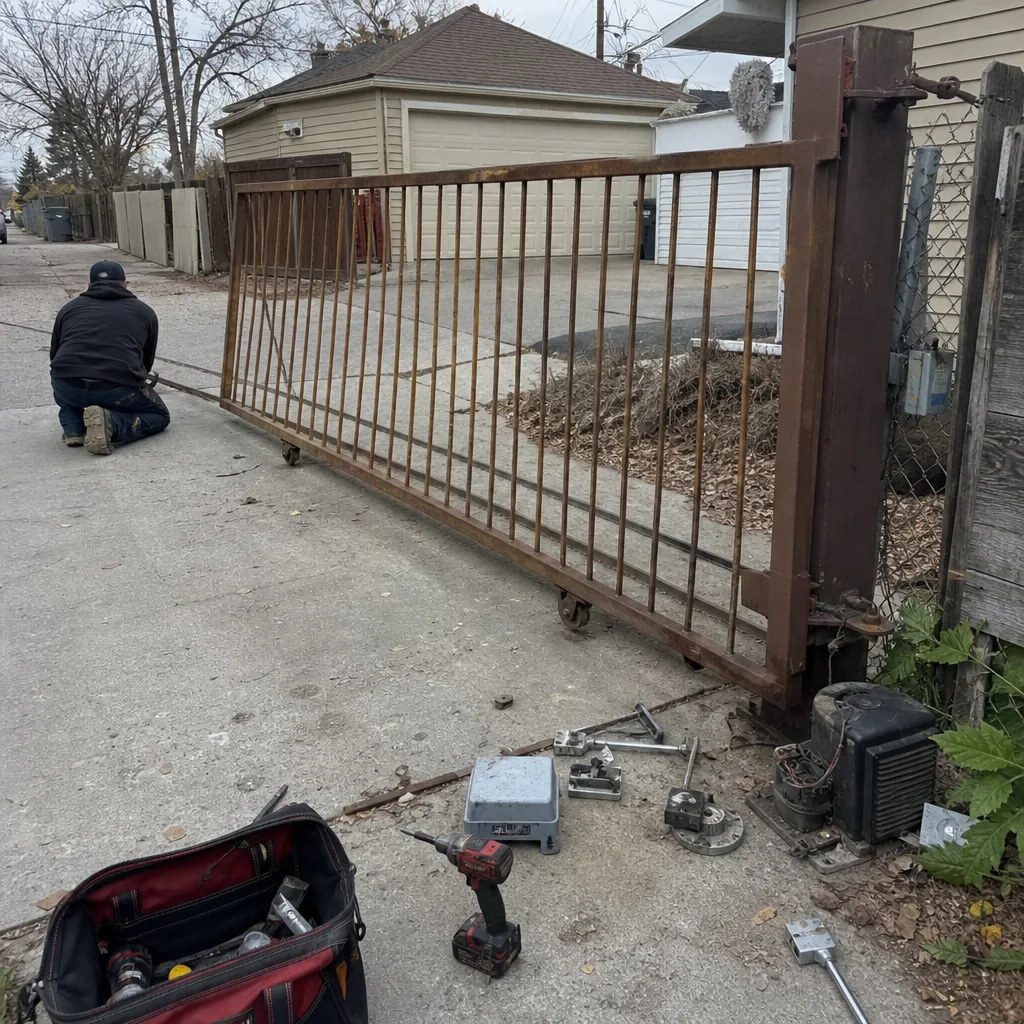 Before
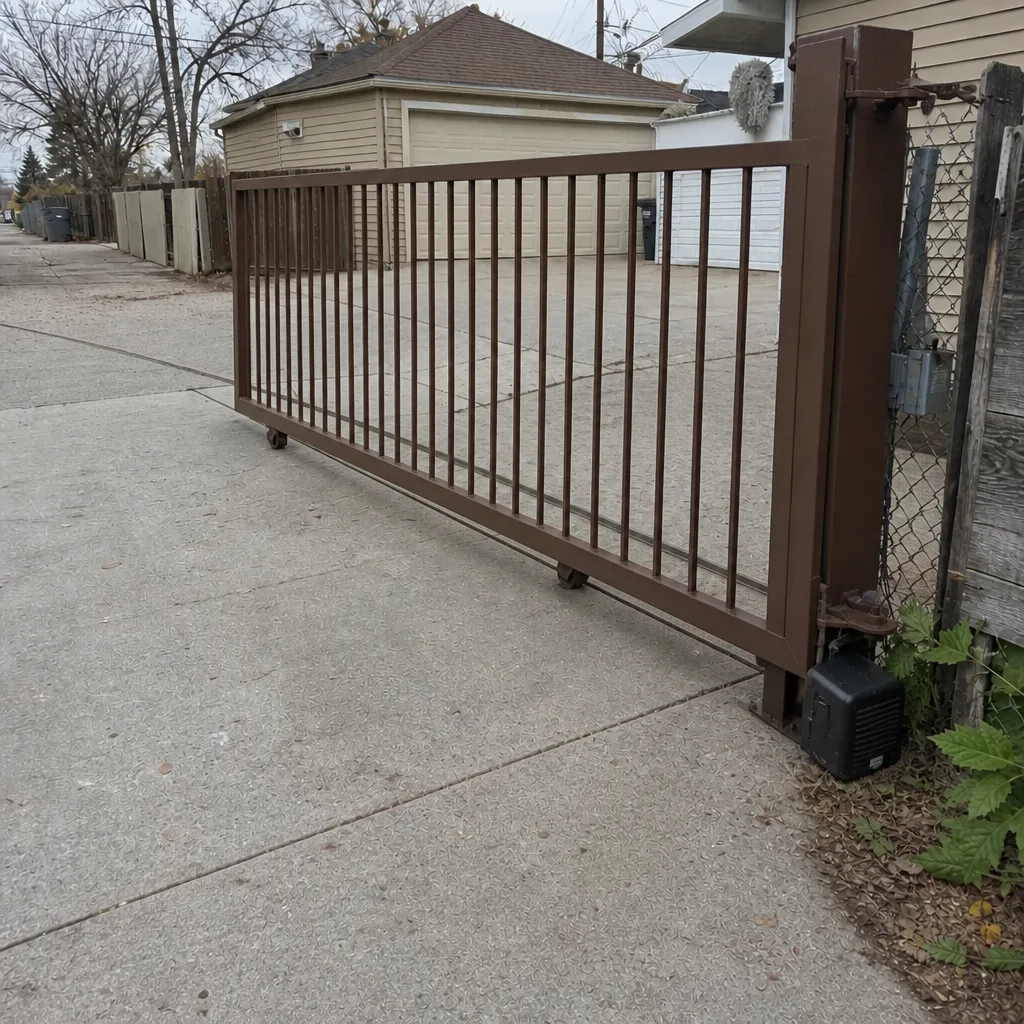 After
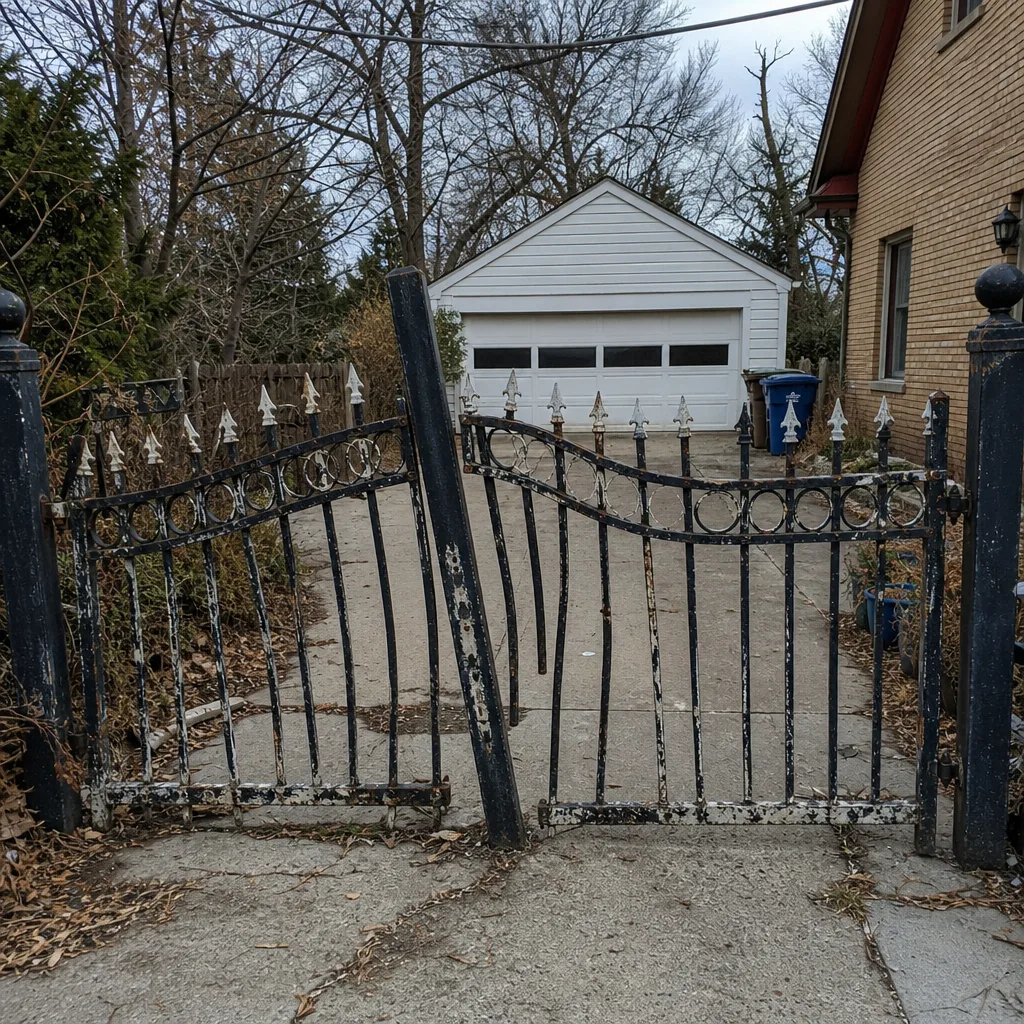 Before
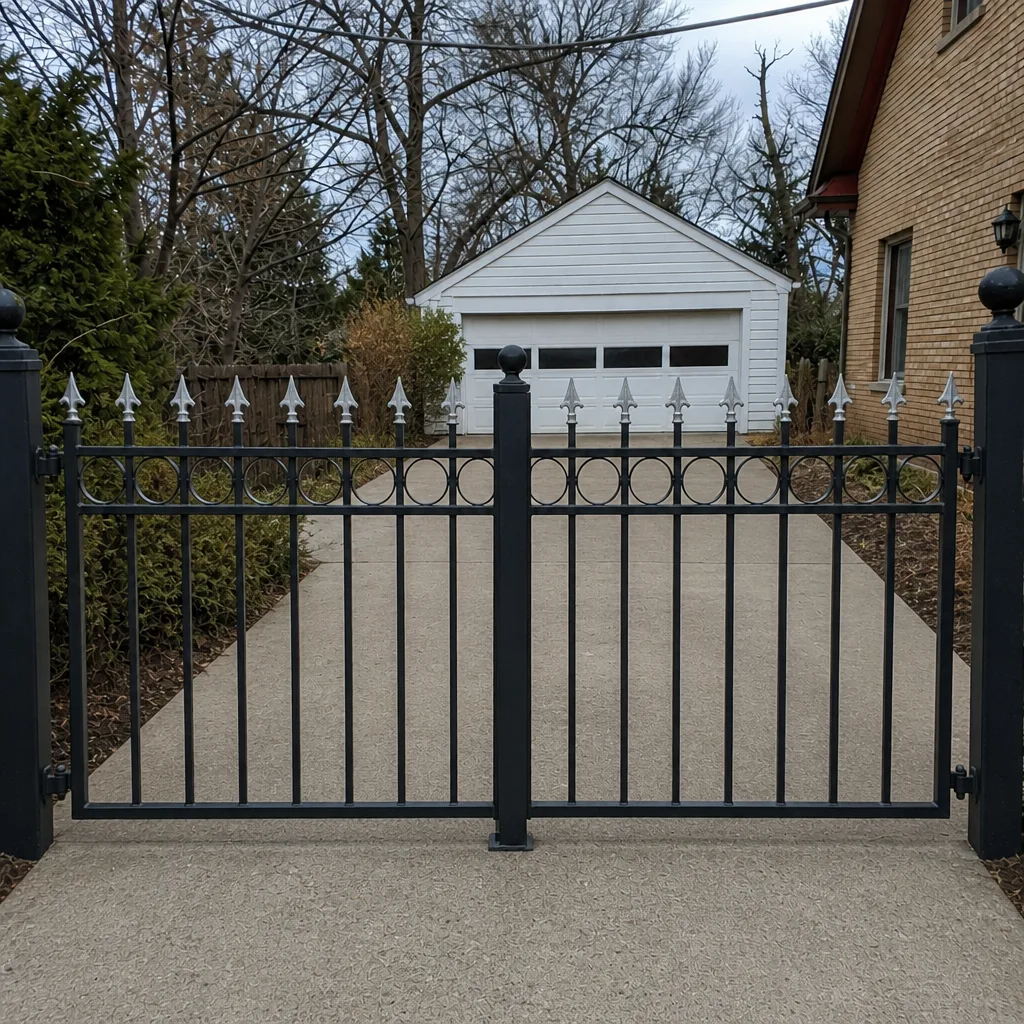 After
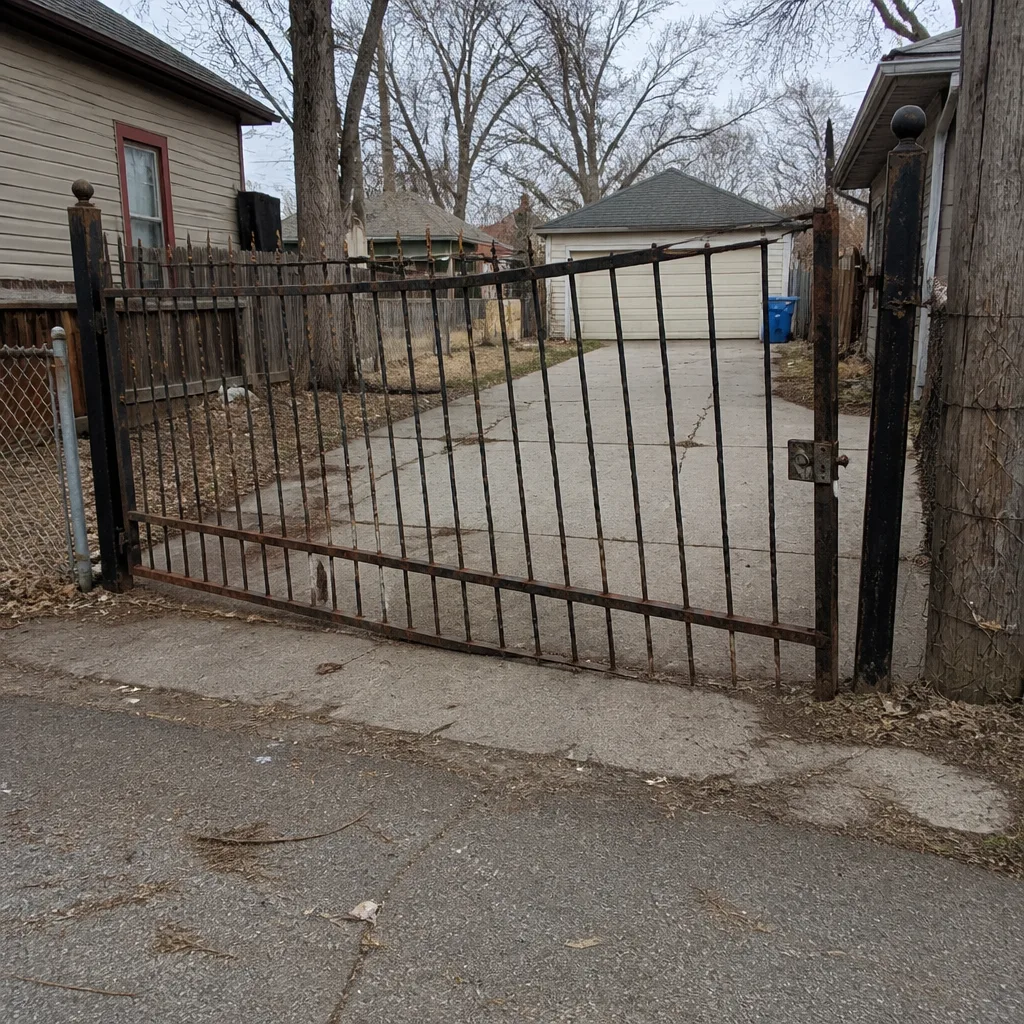 Before
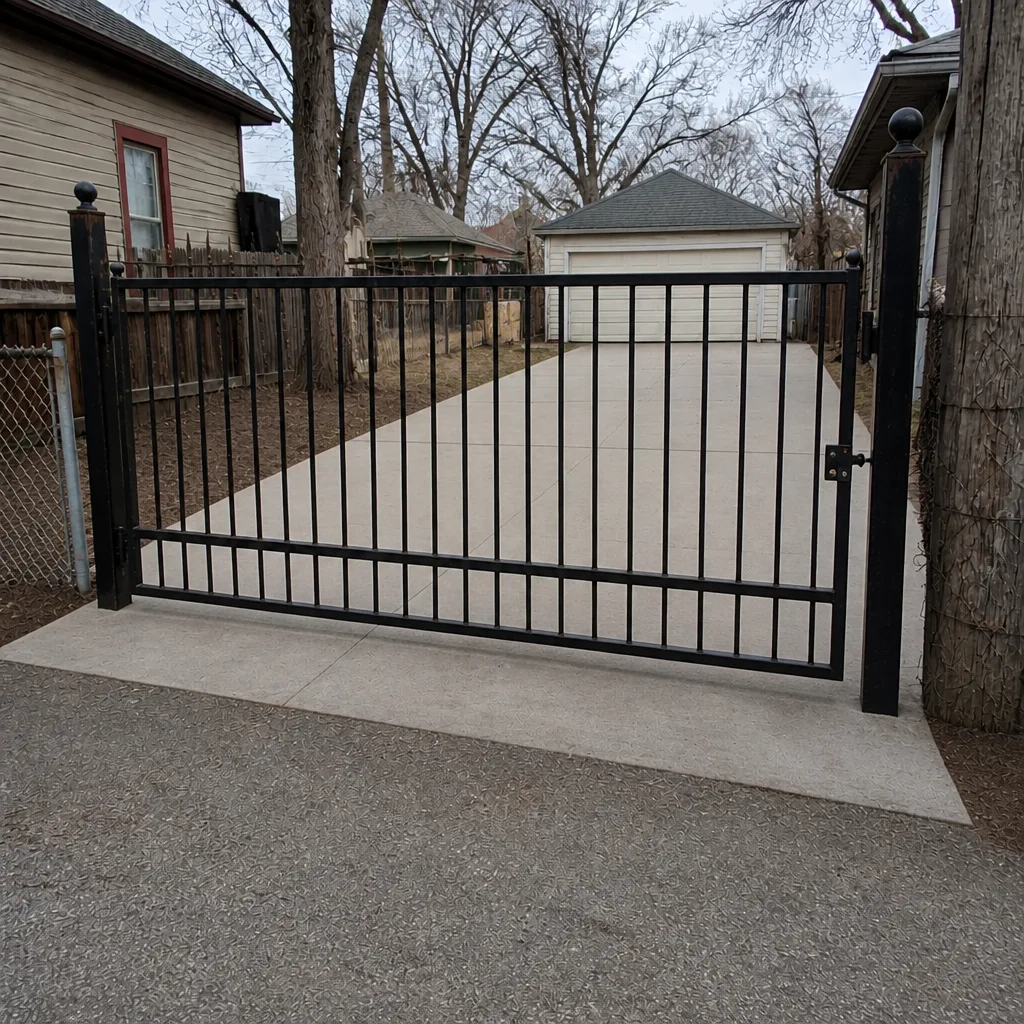 After
When to Call a Professional
Some gate problems are safe to observe but not safe to fix yourself. The dangerous parts of a gate are the operator’s wiring and power, the heavy gate panels that can crush a hand or worse if they fall, and slide gates that come off their track. If your gate’s operator is wired into your home’s electrical supply, leave that wiring alone and call a licensed technician. The same goes for a gate panel that’s coming off its hinges or a post that’s visibly leaning, because propping or adjusting heavy panels without the right equipment is how people get hurt.
Call us when the gate stops responding, reverses for no reason, drags on the ground, or opens partway and stops. Call when a loop detector stops seeing cars, when the keypad or remote quits, or when the gate has started moving unevenly after a cold snap. If you’re not sure whether it’s an emergency, call anyway and describe what it’s doing. In Denver, we offer free estimates: call (855) 677-8291. We answer 24/7, with fast dispatch from 7am to 7pm. A call outside dispatch hours is booked into the next opening, Sunday through Friday, 7am to 7pm. If you need a new gate, we’ll come measure and give you a written price before anything is ordered.
Frequently Asked Questions
Gate repair cost in Denver depends on which of the three systems is at fault. A hardware adjustment or a hinge repair costs less than a loop detector replacement or a post reset, and the only way to know which you need is an on-site diagnosis. We set the price per job in a written estimate you agree to before any work starts, so there are no surprises on the invoice. Call (855) 677-8291 for a free estimate.
For repair calls, yes, we aim to reach you the same day. We answer 24/7, and dispatch runs from 7am to 7pm, Sunday through Friday. New gate installation is measured, ordered, and scheduled with a written price rather than handled same-day. Call (855) 677-8291 to check availability for your repair.
That pattern almost always points to soil movement, not the operator. Denver’s clay soil swells with winter moisture and shrinks as it dries, which moves gate posts and throws the gate out of alignment. The fix is usually resetting the post or re-leveling the gate rather than touching the operator. Call (855) 677-8291 and describe the pattern; it helps us diagnose on the first visit.
Yes. Electric and automated gate systems are a core part of what we do, not an add-on. We repair operators, control boards, safety edges, keypads, remotes, and access control, and we work with the brand you already own, including Ghost Controls, DoorKing, Elite, and Mighty Mule. Call (855) 677-8291 for a free estimate.
Yes, and the repair is worth doing properly. Loop failure in Denver is usually caused by freeze-thaw cycles working moisture into the saw cut and breaking the wire. A repair that finds the break, splices it correctly, and reseals the cut will last; one that skips the reseal won’t. Call (855) 677-8291 for an electric gate repair estimate.
Yes. We handle both gate repair and new gate installation, from manual swing gates to fully automated electric systems. For installation, we come measure on site, give you a written price, and schedule the work once you approve. Call (855) 677-8291 to set up a free measure.
The Bottom Line
Gate failures in Denver follow patterns, and the patterns are mostly environmental. Clay soil moves posts, freeze-thaw cycles break loop detectors, and intense sun ages wiring and plastic. The repair that lasts addresses the root cause: the footing, the wire run, the seal on the saw cut. The repair that fails again in six months just adjusts the hinge and hopes. If you remember one thing from this guide, make it this: before you replace an operator, confirm the fault isn’t structural. A gate-only specialist will read the failure history on arrival and tell you which of the three systems is actually at fault. Gate Repair Denver offers free estimates. Call (855) 677-8291. We answer 24/7, with fast dispatch from 7am to 7pm, Sunday through Friday.
Written by the team at Gate Repair Denver, serving Denver since 2015.