
Last updated November 14, 2026
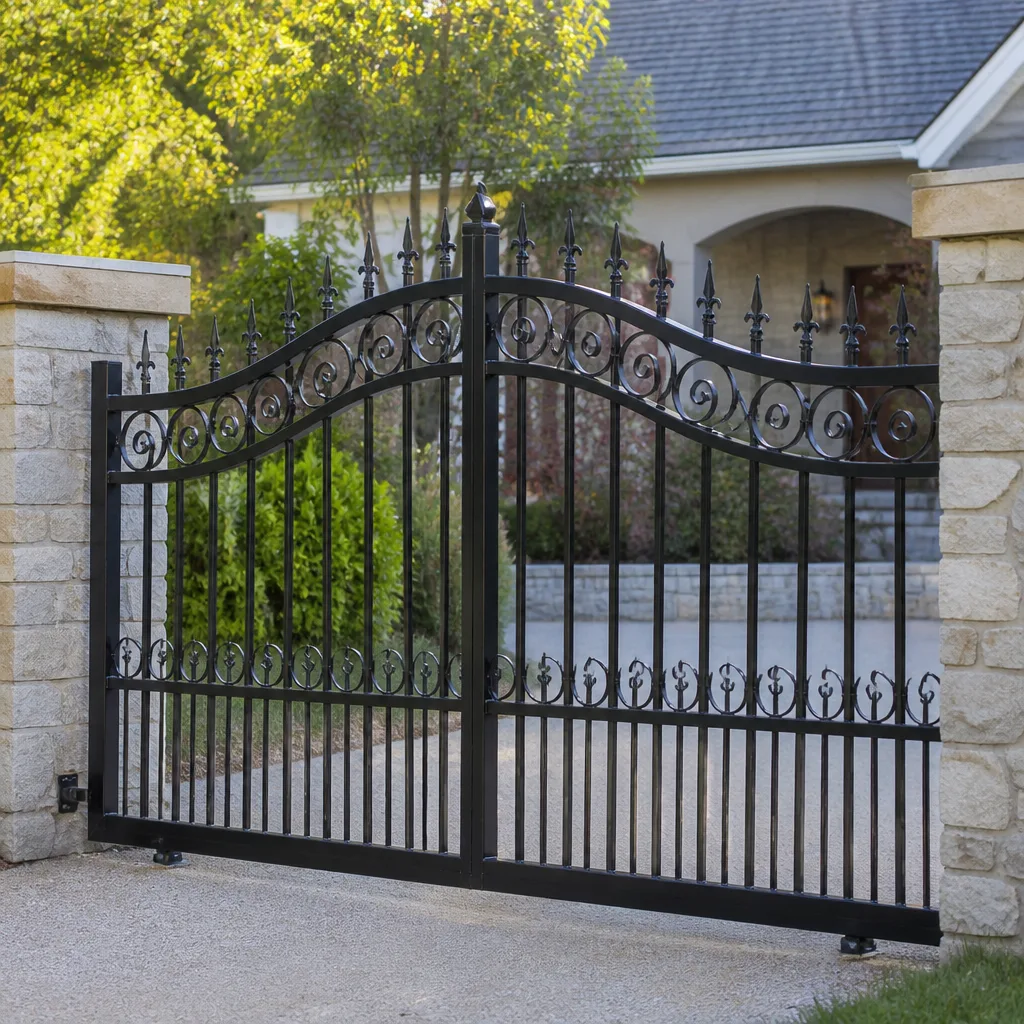 Wrought iron
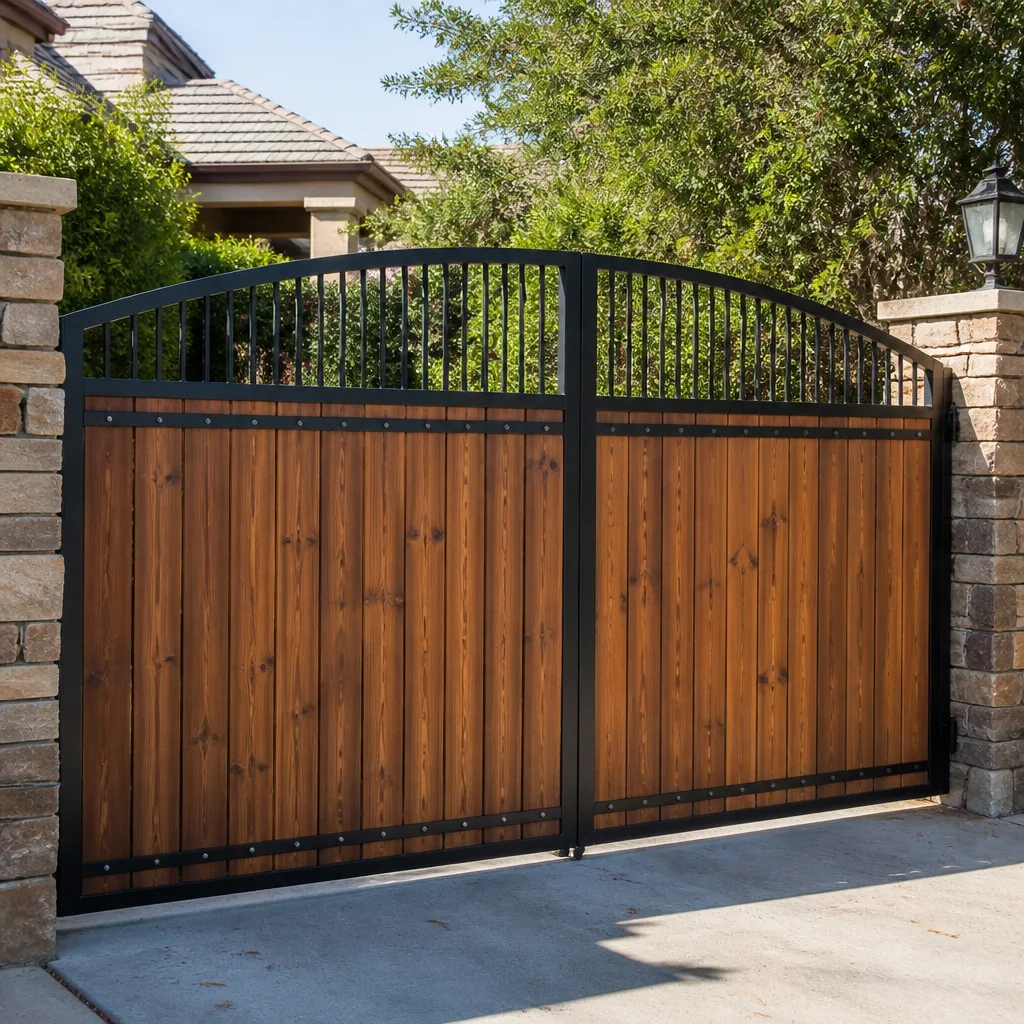 Wood & steel frame
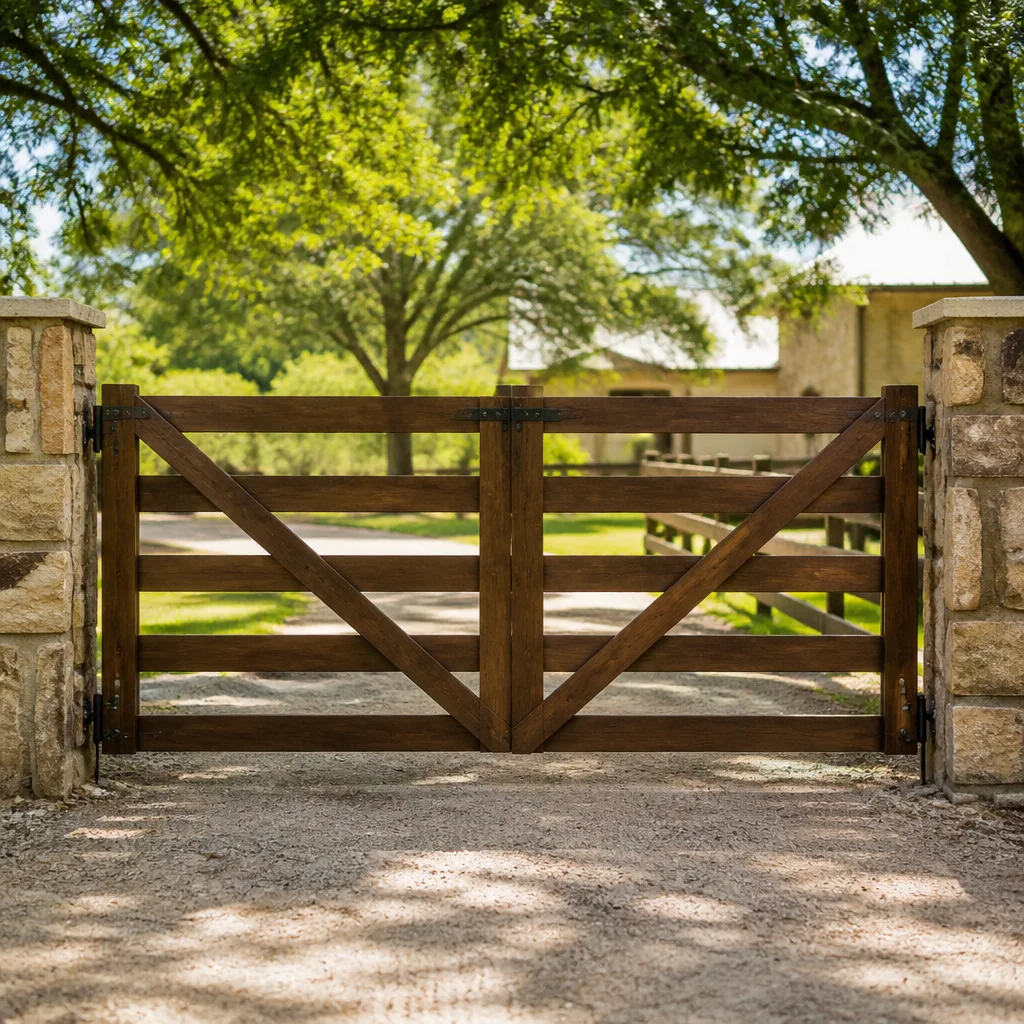 Farm & ranch
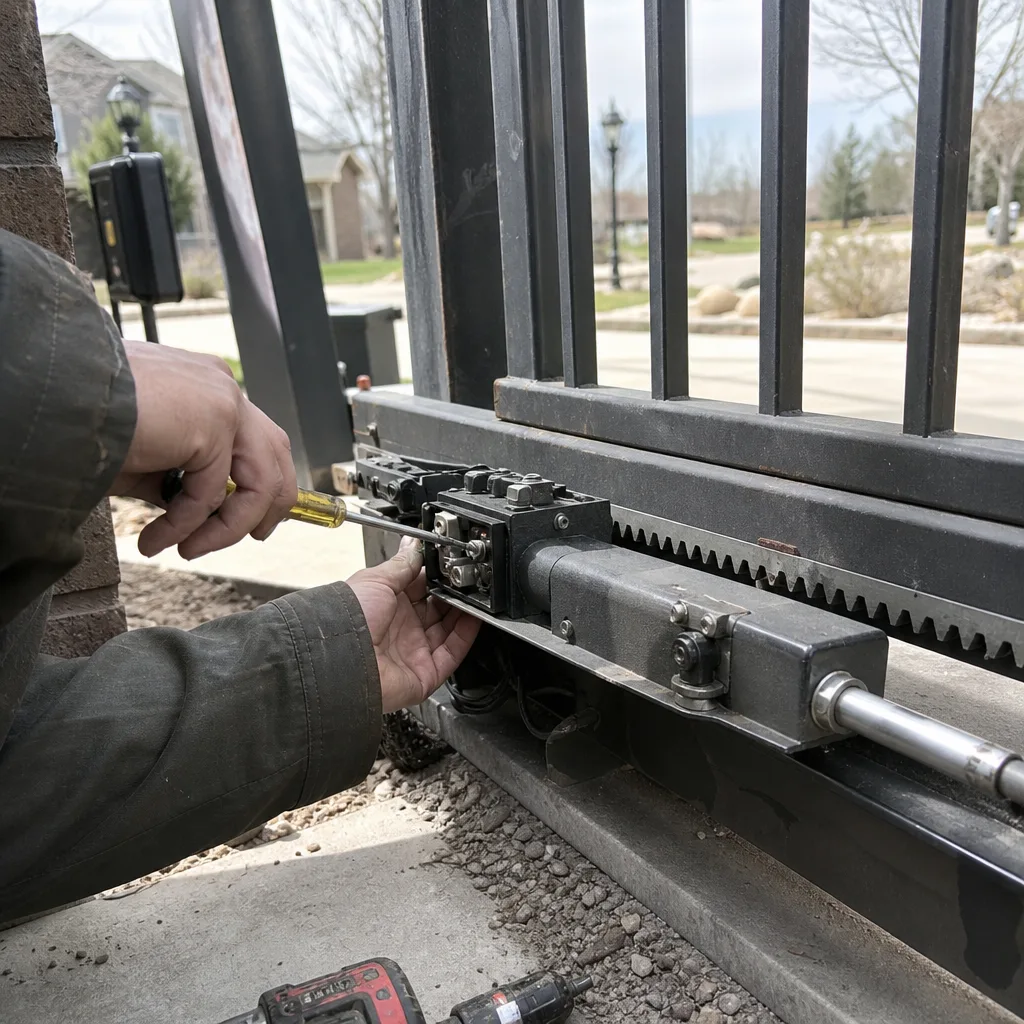
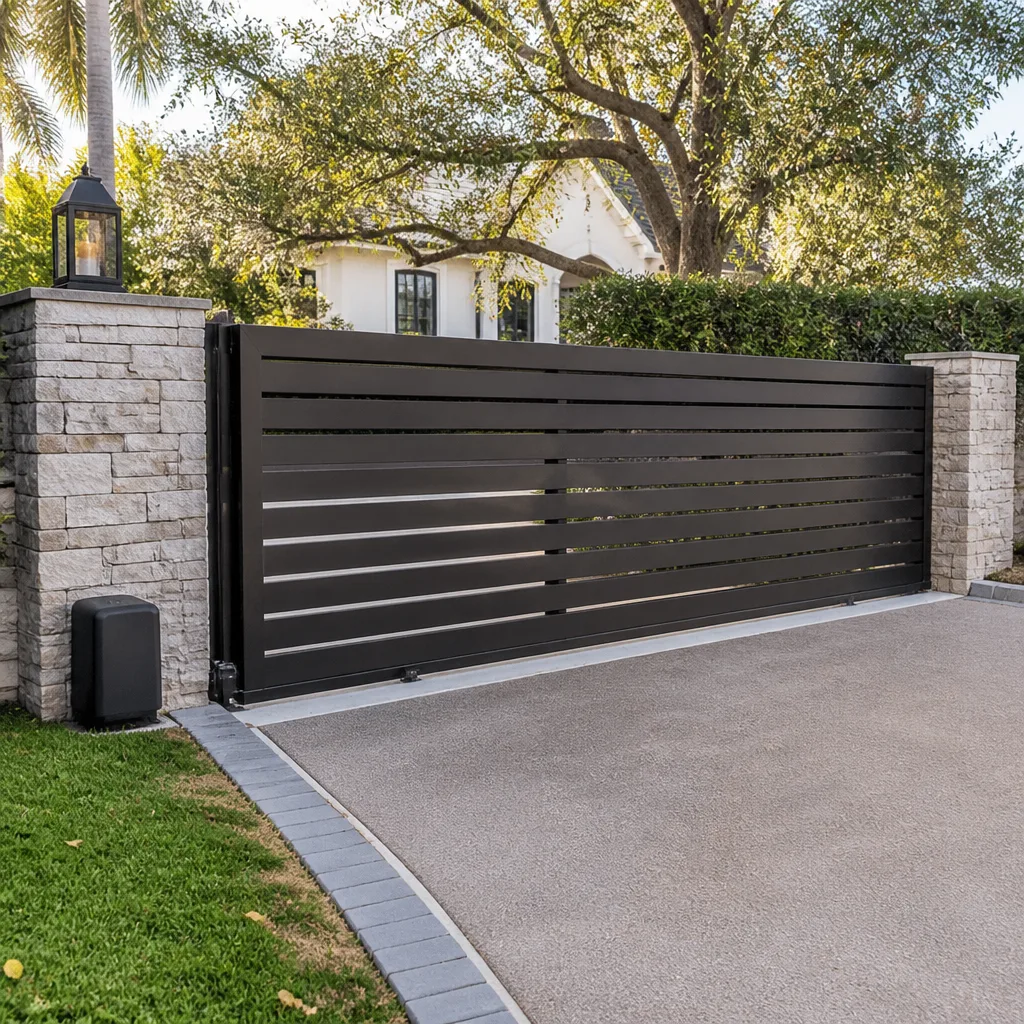 Sliding driveway gates
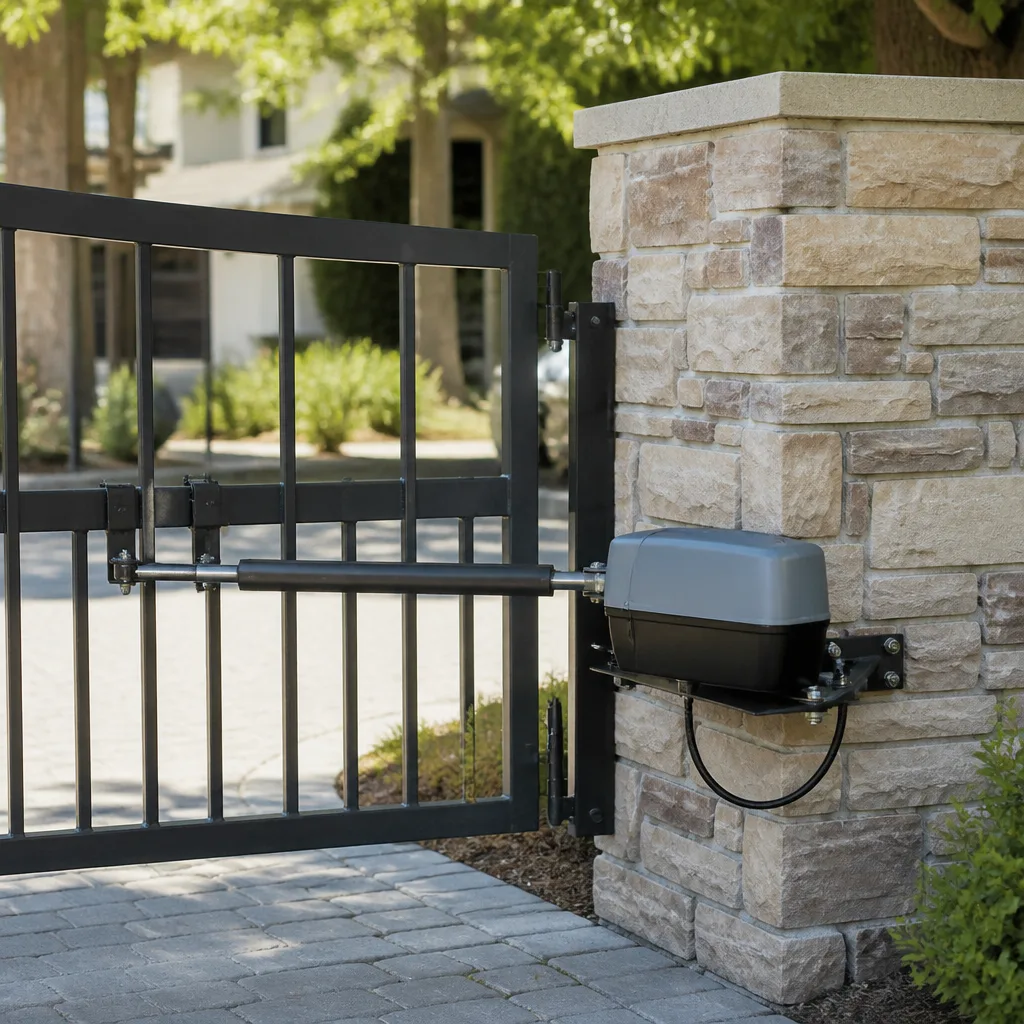 LiftMaster operators
Free on-site gate assessment - hinges, posts, and your LiftMaster or Nice gate operator checked before anything is quoted
The assessment is free and the quote is the invoice.
Get your free estimateGate Repair Maintenance Checklist for Denver Homeowners
The most common cause of a “dead” electric gate in Denver is not a failed motor. It is a backup battery that has been sitting untouched since the day the gate was installed. That surprises most homeowners, because a gate that won’t move feels like a mechanical failure. A backup battery is a 10-second check, and skipping it is what turns a quiet weekend into a stranded vehicle in the driveway. Denver’s elevation, intense UV, and wide temperature swings accelerate wear in ways coastal or low-altitude guides never address. This checklist is built around those specific failure modes, and we’ll walk you through what to check, how to check it, and when to stop and call.
Quick Answer
Run this checklist twice a year, in spring after the last freeze and in fall before the first hard freeze. A thorough pass covers the battery backup, the drive mechanism, post bases and footings, and the safety devices, and it catches most problems before they leave a gate stuck open or closed. If you find something you can’t fix safely, an electric gate repair visit is the right next step.
Styles & brands we work with
- Wrought iron
- Wood & steel frame
- Farm & ranch
- Sliding driveway gates
- LiftMaster operators
Table of Contents
- Backup Battery Load Test for Colorado’s Temperature Range
- Re-Lubricating Chain, Screw, and Swing Arm Drives by Operator Type
- Post Bases and Concrete Footings After Spring Thaw
- Safety Edge and Photo Eye Alignment: Pass/Fail Criteria
- Checklist Items That Void Warranties and How to Document Them
- Denver’s Seasonal Calendar: When to Do What
- Manual and Swing Gate Checks
- Frequently Asked Questions
Backup Battery Load Test for Colorado’s Temperature Range
Gate operators in Denver live a harder life than the manufacturer’s testing assumes. The batteries inside them are typically sealed lead-acid, and their capacity drops as temperature falls. Denver’s swings from warm summer highs to deep winter lows push that chemistry back and forth, and a battery that tests fine in July can fail to move the gate in January. That is why a gate can work all summer and then go dead on the first cold morning.
A visual inspection tells you almost nothing. You need a load test. Here is how to run one safely:
- With the gate closed and the operator powered normally, disconnect the main power at the breaker or the operator’s disconnect switch. Do not open the operator housing if it requires tools you don’t have or if you’re unsure which breaker controls it.
- Command the gate to open using a remote or keypad. A healthy battery should move the full leaf or slide panel at close to normal speed.
- Watch for the gate slowing, stalling, or reversing partway. Any of those means the battery is weak and needs replacement.
- Restore power and confirm the operator recharges and resumes normal operation.
Do this test in late fall before the hard freezes arrive. A battery that passes in September is the best insurance against a winter failure. If your operator uses a brand we see regularly, like Linear or Viking, the battery location and access are usually straightforward, but the test itself is the same regardless of brand.
Re-Lubricating Chain, Screw, and Swing Arm Drives by Operator Type
Not all gate drives need the same lubrication, and using the wrong product on the wrong drive is worse than skipping it. Three drive types cover most residential gates, and each has its own rhythm.
- Chain drives: These are the most forgiving and the most common on sliding gates. Clean the chain with a dry brush to remove grit, then apply a chain-specific lubricant that won’t fling off. Denver’s dust and grit collect on a dry chain fast, so a light re-lube twice a year keeps it running quietly. Never use heavy grease on a chain; it holds grit and accelerates wear.
- Screw drives: These need a lighter, non-gumming lubricant. Too much product on a screw drive attracts dirt into the nut and can cause binding. Apply sparingly along the exposed screw and cycle the gate a few times to distribute it.
- Swing arm drives: Lubrication points are usually limited to the arm joints and pivot points. Check the manufacturer’s guidance for your specific operator, because some arms are sealed and need no lubrication at all. Over-lubricating a sealed arm can attract grit to the seals.
Brands like DoorKing and Ghost Controls each build their drives differently, and the operator manual is the final word on the product to use. If you don’t have the manual, that alone is a reason to have a specialist look at the drive rather than guess.
Post Bases and Concrete Footings After Spring Thaw
Denver’s freeze-thaw cycle is the quiet enemy of gate alignment. Water gets into small cracks around a post base, freezes, expands, and lifts the concrete slightly. Do that over one winter, then another, and the post shifts. The gate doesn’t just look crooked; it starts binding in the track or swinging into the strike post.
Walk the line of your gate every spring and look for these signs of heave before they become misalignment:
- A visible gap or crack where the post meets the concrete, especially on the side that faces the morning sun.
- Concrete that has risen above the surrounding grade, or a post that leans by even a few degrees.
- New binding, scraping, or a gate that needs a push to close when it didn’t last season.
- Rust streaks at the base of a steel post, which can mean water is pooling in the footing.
If a footing has heaved, do not try to muscle the gate back into alignment by adjusting hinges or tracks. That masks the problem and stresses the operator. A post that has moved needs to be re-set correctly, and that is a job for a gate specialist. In our experience across Denver, footing issues that get caught early are far cheaper to fix than a gate that has been forced out of alignment for a season.
Safety Edge and Photo Eye Alignment: Pass/Fail Criteria
“Make sure it works” is not a test. Safety devices need a pass/fail standard, because a gate that mostly stops for a person is a gate that will eventually hurt someone. Here is the standard we use.
Photo eyes (through-beam sensors):
- Pass: With the gate closing, break the beam with your hand or a test object. The gate reverses within its normal response distance. Test at the bottom, middle, and top of the gate’s travel.
- Fail: The gate continues closing, hesitates, or reverses only after hitting the object. Also a fail if the photo eye lens is cloudy, misaligned, or the LED indicator is not solid.
Safety edges (pressure-sensitive edges on the gate leaf):
- Pass: Press the edge while the gate is closing and the gate reverses or stops. The edge should also be intact, with no cuts or exposed wiring.
- Fail: No response, a slow response, or visible damage to the edge or its wiring.
Do this test monthly, not just twice a year. Safety devices are the one part of a gate where a slow failure is genuinely dangerous, and we treat any failed safety check as urgent. It’s also worth testing the manual release so you know it works before you need it.
Checklist Items That Void Warranties and How to Document Them
Operators carry warranties, and a few maintenance habits protect them while a few careless ones can void them. The two most common warranty killers are using the wrong lubricant on a drive and ignoring a known safety-device fault until the operator fails. Manufacturers also expect that maintenance was actually done, and that’s where documentation matters.
Keep a simple log. For each service, note the date, who did the work, and what was checked or replaced. Photograph the battery label before replacement, the drive before and after lubrication, and any safety device you tested. If a warranty claim ever comes up, that log is your proof that the gate was maintained and the fault wasn’t neglect. Skip it and you may be arguing from memory against a manufacturer’s records.
Installation matters here too. A gate installed with undersized footings or a drive mounted off-square can void a warranty before the first year is out. If your gate was installed by someone else and you’re not sure it was done to spec, a fresh look is worth it. Denver homeowners with older gates often discover the original install was the root of a recurring problem.
Denver’s Seasonal Calendar: When to Do What
Timing matters in Denver more than in milder climates. The goal is to catch wear before the extremes hit. Here is the schedule we recommend:
- Early spring (after the last hard freeze): Walk the post bases and footings for heave. Test the gate’s travel and alignment. Check for grit in tracks and clean the drive.
- Late spring: Test safety edges and photo eyes thoroughly. Inspect wiring and conduit for winter damage or rodent chewing.
- Late summer: Re-lubricate the drive based on type. Check the operator housing for UV cracking, which is common at this elevation.
- Early fall (before the first hard freeze): Run the battery load test. This is the single most important seasonal task. Replace a weak battery now, not in January.
Two full passes a year, spring and fall, catch the majority of problems. If you own a manual gate, the schedule is lighter but the footing and hinge checks still apply.
Manual and Swing Gate Checks
A gate with no operator still has moving parts and still needs a look twice a year. Swing gates depend on hinges, latches, and the posts they hang from.
- Open and close the gate by hand. It should move smoothly with no binding, scraping, or sagging.
- Check hinge hardware for looseness and rust. A gate that sags at the latch side is usually a hinge or post problem, not a latch problem.
- Inspect the latch and strike for alignment. A gate that has to be lifted to latch is a sign the post has settled.
- Look at the post bases for the same heave signs described above.
Manual gates on a property line shared with a neighbor are worth coordinating on, since a footing issue affects both sides. Whether your gate is manual or powered, the same rule applies: catch movement early and it stays a small job.
Common Mistakes to Avoid
- Never testing the backup battery. If you skip the load test, you won’t know it’s failing until a cold morning strands the gate. Manufacturers don’t design the battery to outlast the seasons on its own.
- Using the wrong lubricant. Heavy grease on a chain collects Denver’s grit and wears it faster. Use the product the operator manual specifies for your drive type.
- Adjusting the gate to hide a footing problem. Cranking hinges or tracks to compensate for a heaved post puts more stress on the operator and shortens its life.
- Treating safety devices as “probably fine.” A photo eye that reverses only after contact is a fail, not a pass. Test with clear pass/fail criteria, monthly if the gate is in daily use.
- Not keeping a maintenance log. When a warranty claim comes up, the log is what protects you. Without it, you’re relying on memory.
- Ignoring a change in gate speed or sound. A gate that suddenly slows, reverses, or grinds is telling you something specific. Treat it as an early warning rather than waiting for a full failure.
- Letting a generalist diagnose an operator problem. A gate-only specialist recognizes the failure pattern faster than a multi-trade contractor who also happens to work on gates. That matters more when the problem is electrical.
See the difference
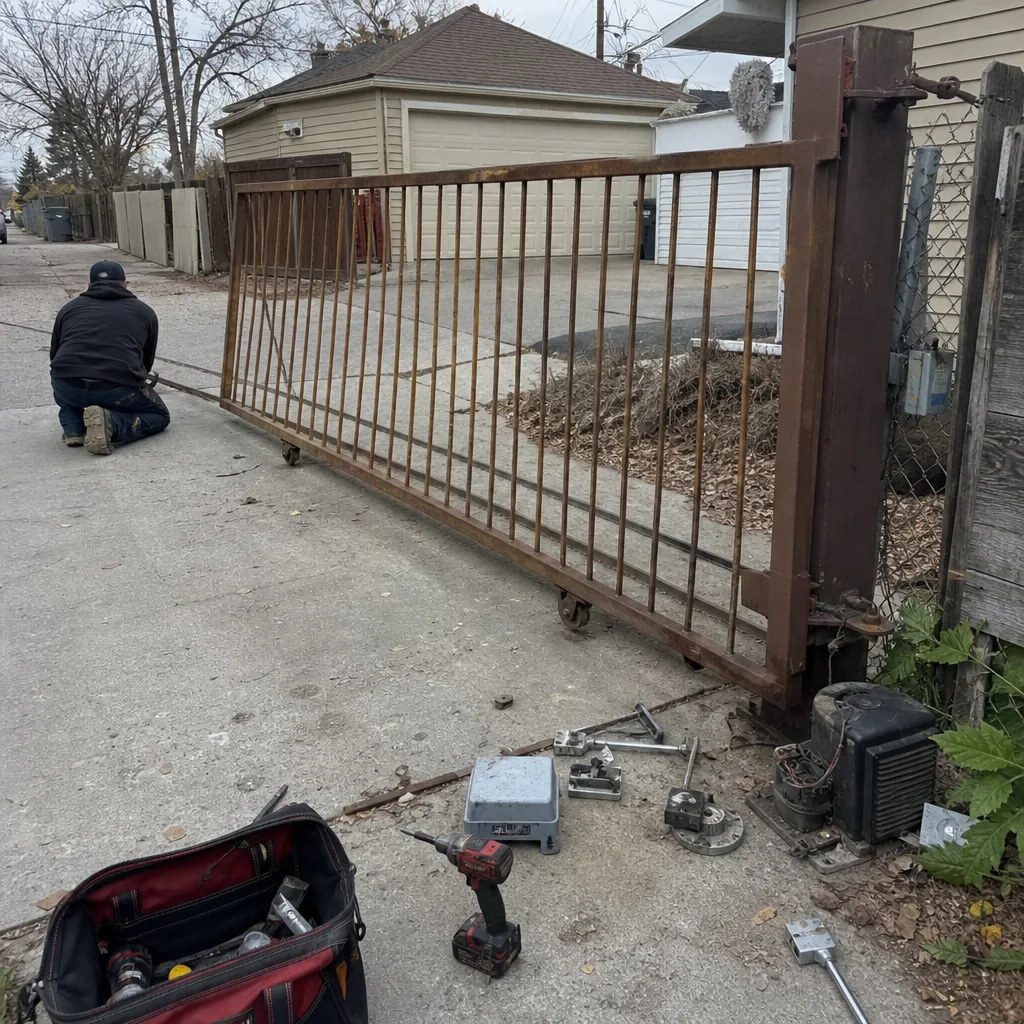 Before
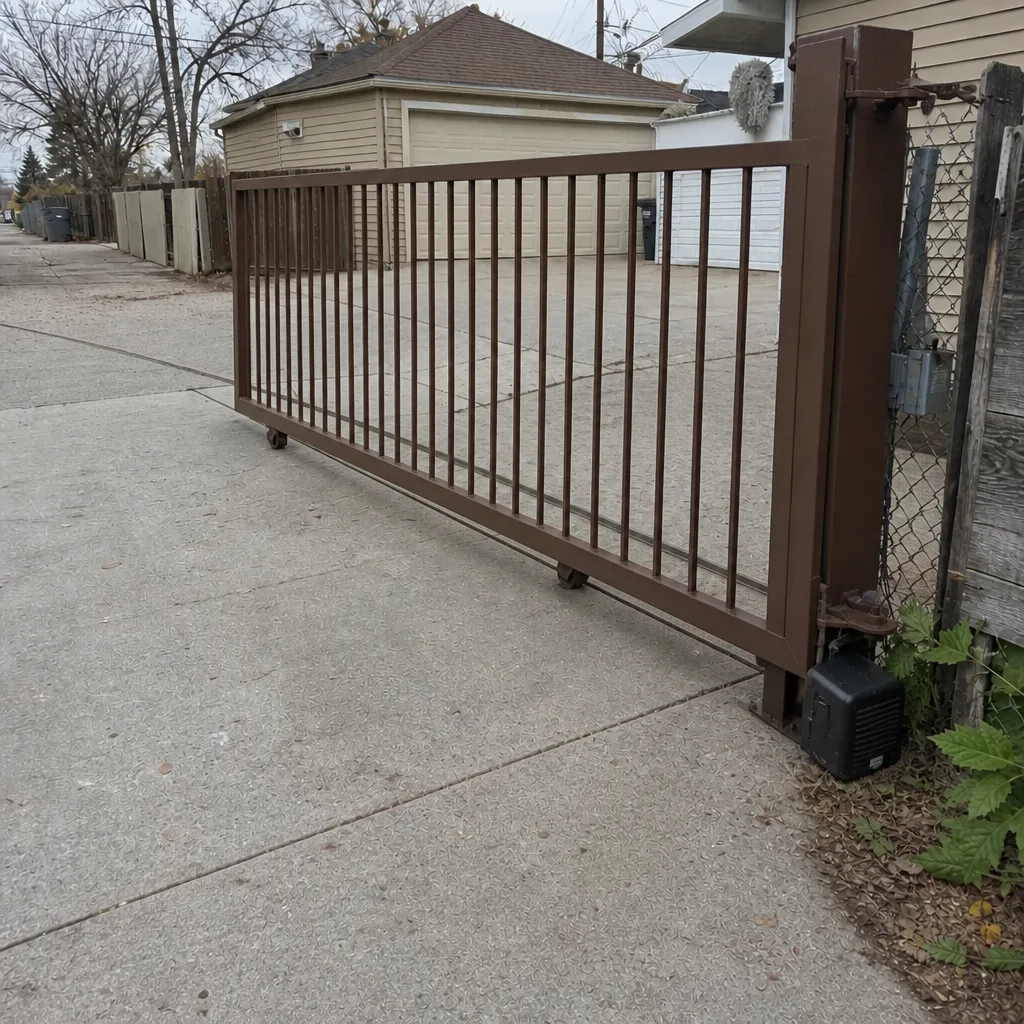 After
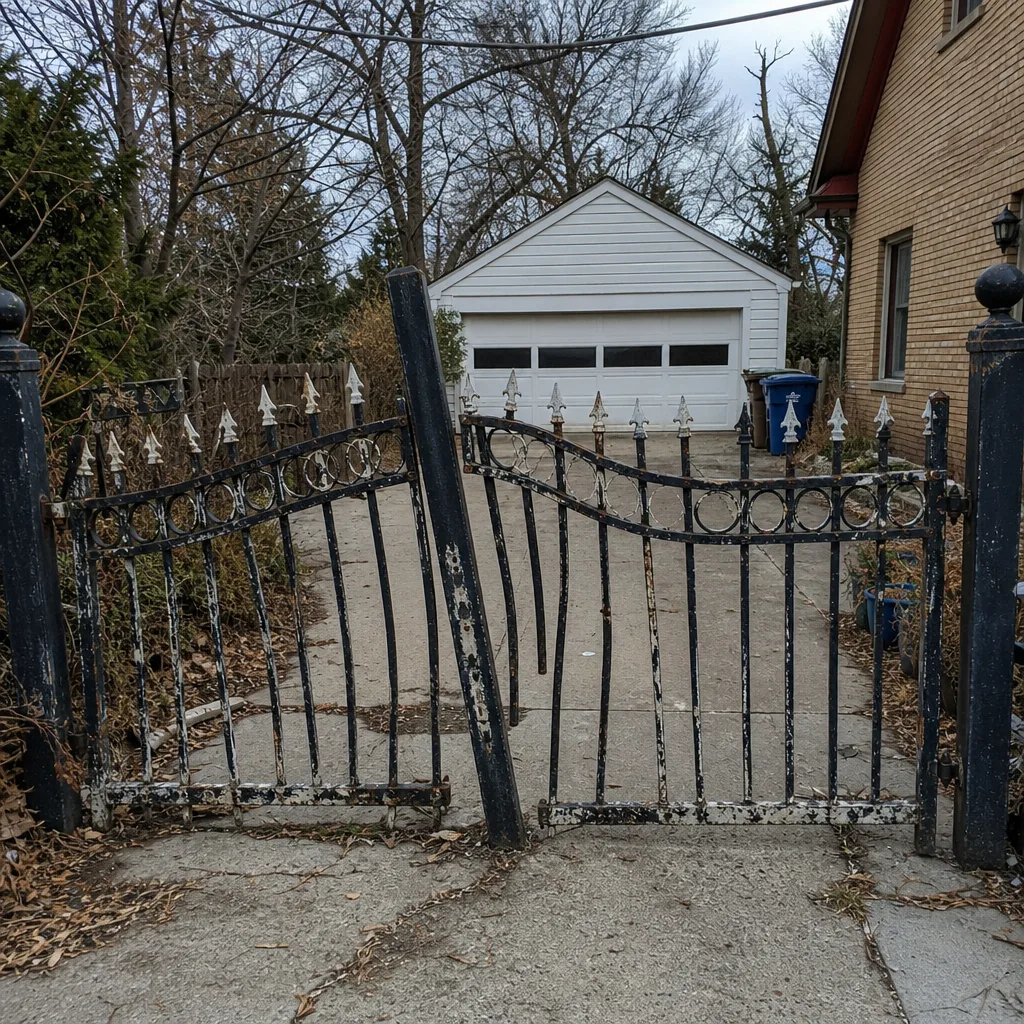 Before
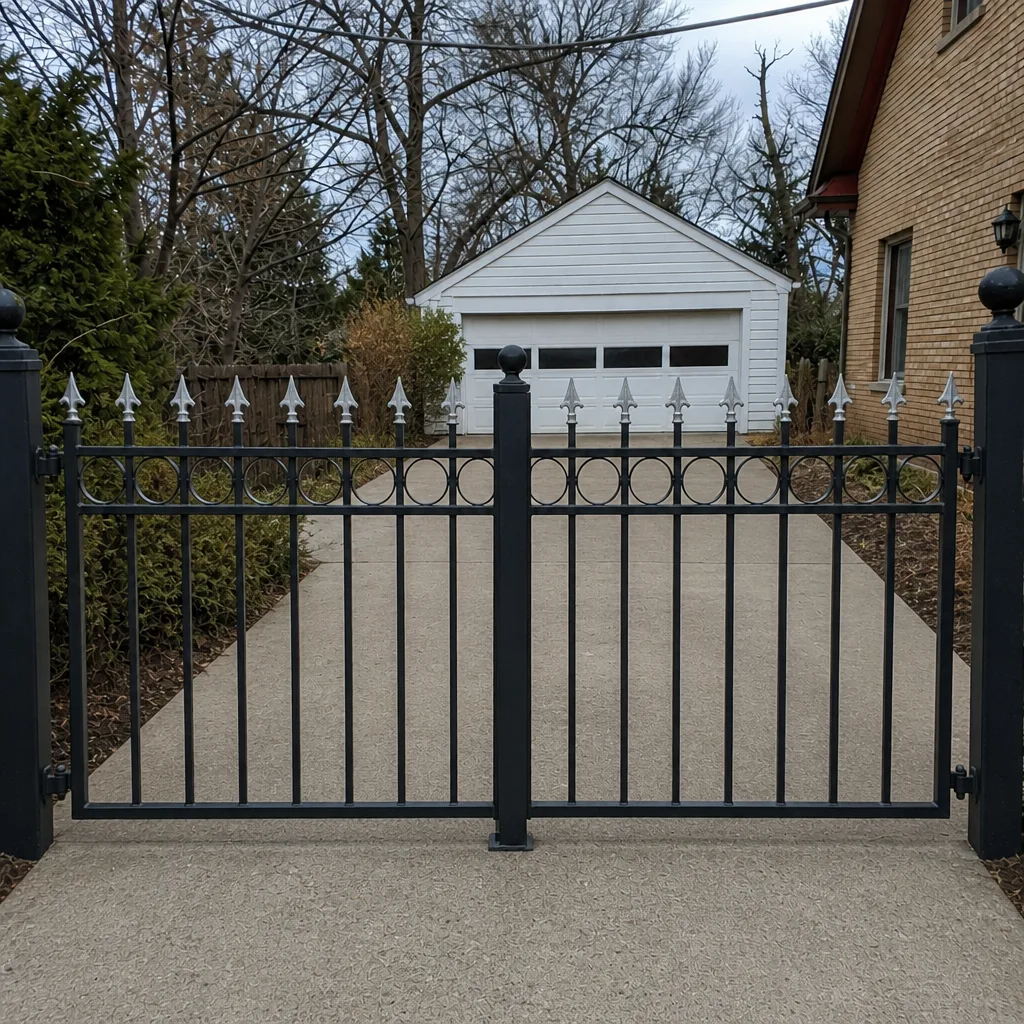 After
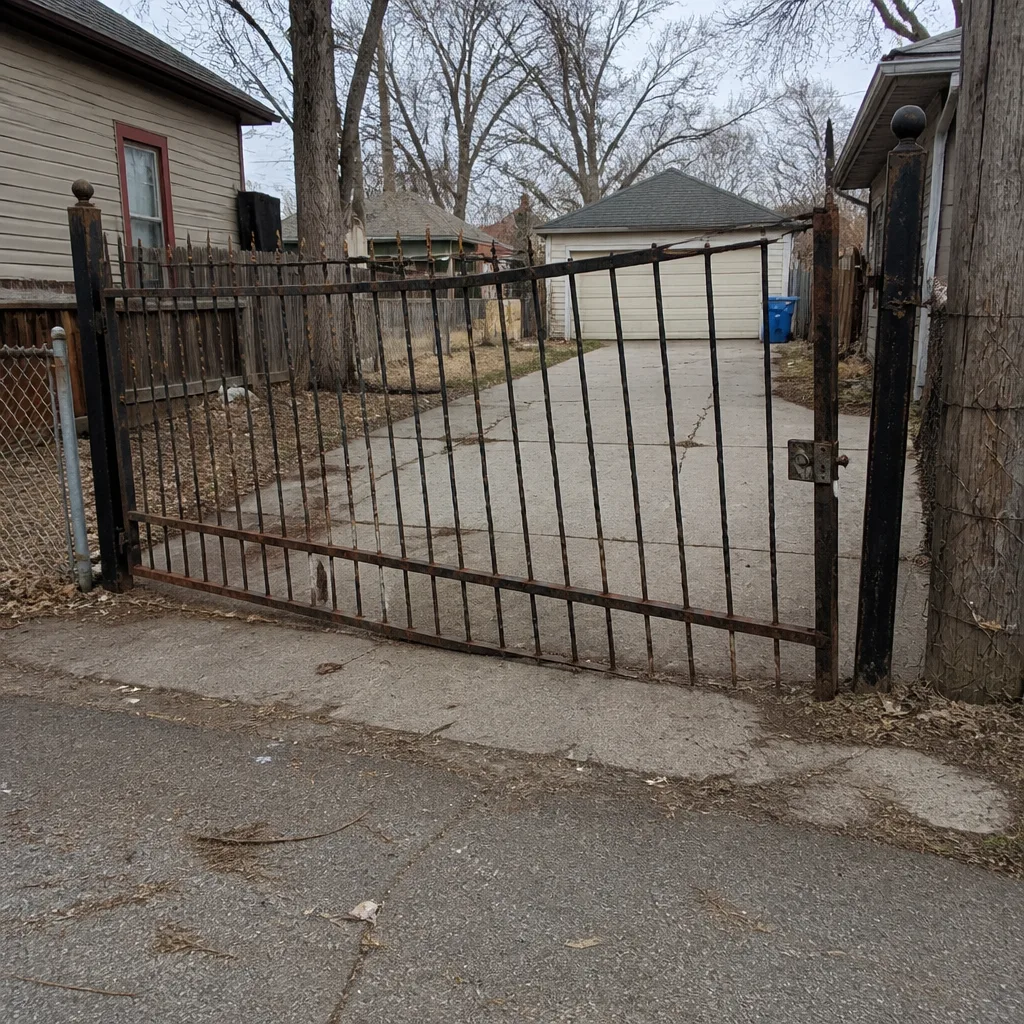 Before
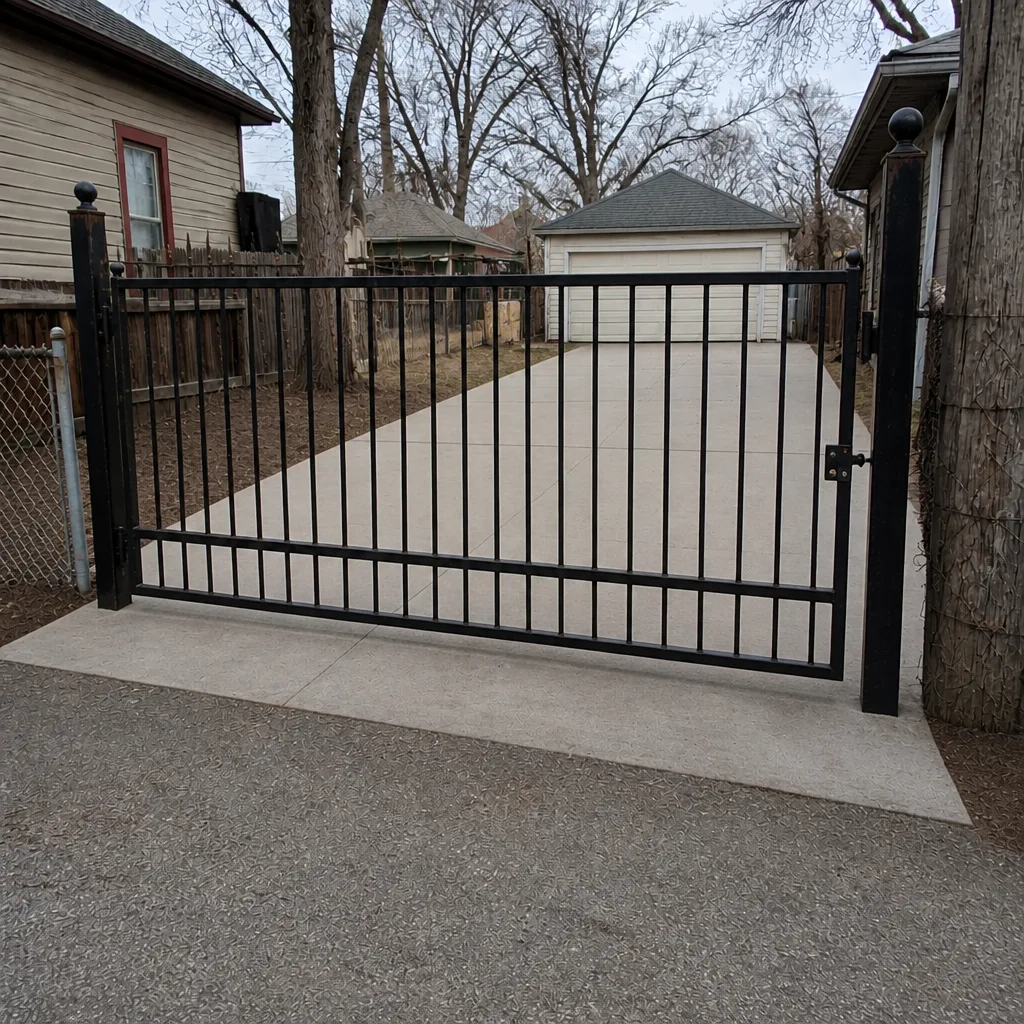 After
When to Call a Professional
Some parts of this checklist you can do comfortably. Others are for a trained technician. Call a professional if you find a damaged safety edge, exposed wiring at the operator, a post that has clearly heaved, or an operator that trips a breaker or runs with a burning smell. Never open the operator housing or work on the electrical panel if you’re unsure how the power is routed. The operator’s wiring and the weight of a gate leaf can hurt you.
Gate Repair Denver offers free estimates in Denver, and we work on the brand you already own, including Linear, DoorKing, and Viking systems. Call (855) 677-8291 for an honest look at what your gate needs.
Frequently Asked Questions
Twice a year, in spring after the last freeze and in fall before the first hard freeze. Safety devices should be tested monthly if the gate is in daily use. The fall battery load test is the most important seasonal check in Denver.
It’s usually the backup battery. Cold temperatures reduce battery capacity, and a battery that passed quietly in July can’t move the gate in January. A load test in early fall catches it before it fails.
Yes, if you know your drive type and use the product the operator manual specifies. Chain drives, screw drives, and swing arm drives each need different treatment. When in doubt, have a specialist look at the drive rather than guess.
A crack or gap where the post meets the concrete, a slight lean, or concrete rising above the surrounding grade. New binding or scraping is often the first sign that a footing has moved after a Denver winter.
It can. Manufacturers expect maintenance to be done, and a history of neglect or the wrong lubricant can affect a claim. Keep a dated log and photos so you can show the gate was maintained.
Most likely, yes. We work on the brand you already own, including LiftMaster, FAAC, BFT, Linear, Viking, Ghost Controls, DoorKing, Elite, and Mighty Mule systems. Call us with the brand and model if you have it.
The Bottom Line
Denver’s gate failures rarely come out of nowhere. The elevation, UV exposure, and freeze-thaw cycle wear the battery, the drive, the footings, and the safety devices in predictable ways. Test the battery before the first freeze. Match your lubrication to your drive type. Walk the post bases every spring. Test your safety devices with real pass/fail criteria. Keep a log. Do those things twice a year and you’ll catch most problems early, before they strand a vehicle or turn into an emergency call. And when a check fails, call a specialist rather than force it. Call (855) 677-8291 for a free estimate. We answer 24/7. Fast dispatch from 7am to 7pm, Sunday through Friday.
For a broader look at what we do, see our gate repair and Gate Repair Denver pages. If your gate is electric, start with electric gate repair. We’ve served the Denver area since 2015.
Written by the team at Gate Repair Denver, serving Denver since 2015.