
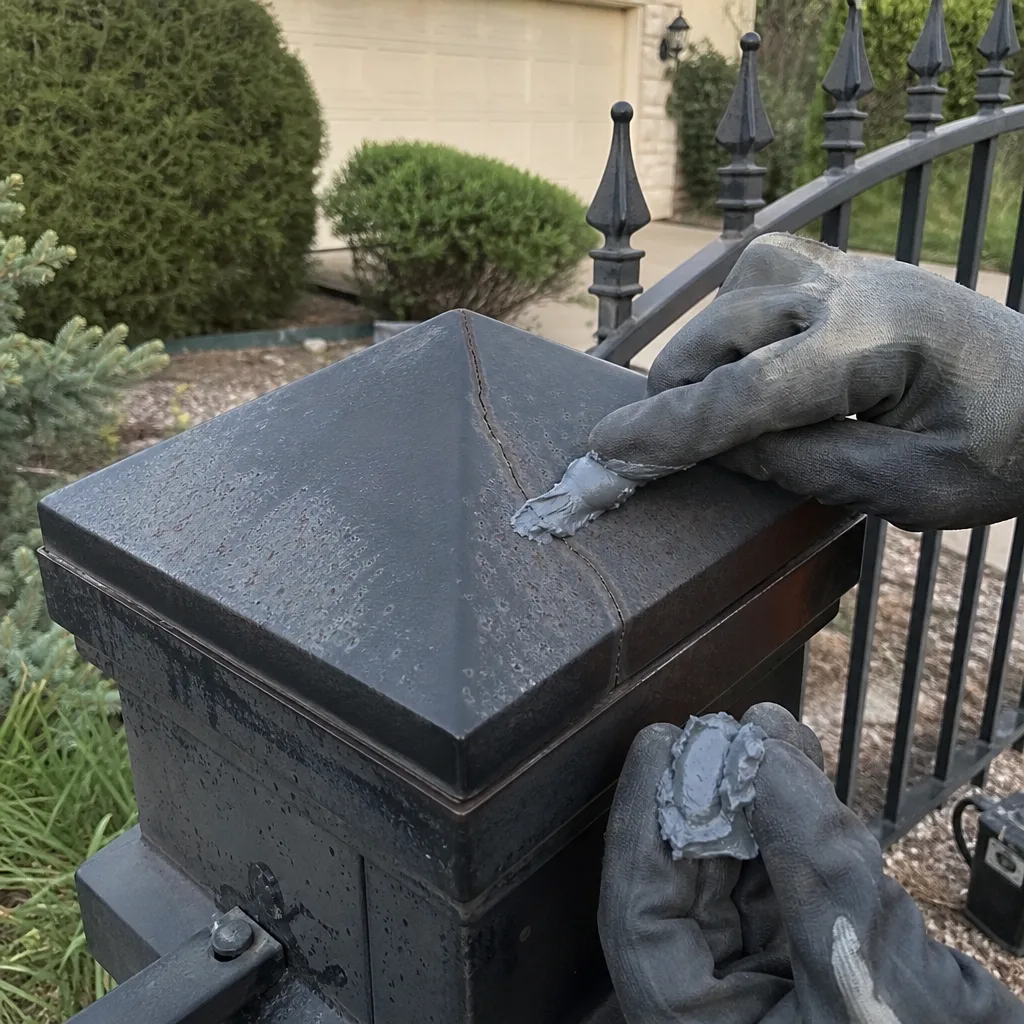
Last updated November 14, 2026
 Wrought iron
 Wood & steel frame
 Farm & ranch
 Sliding driveway gates
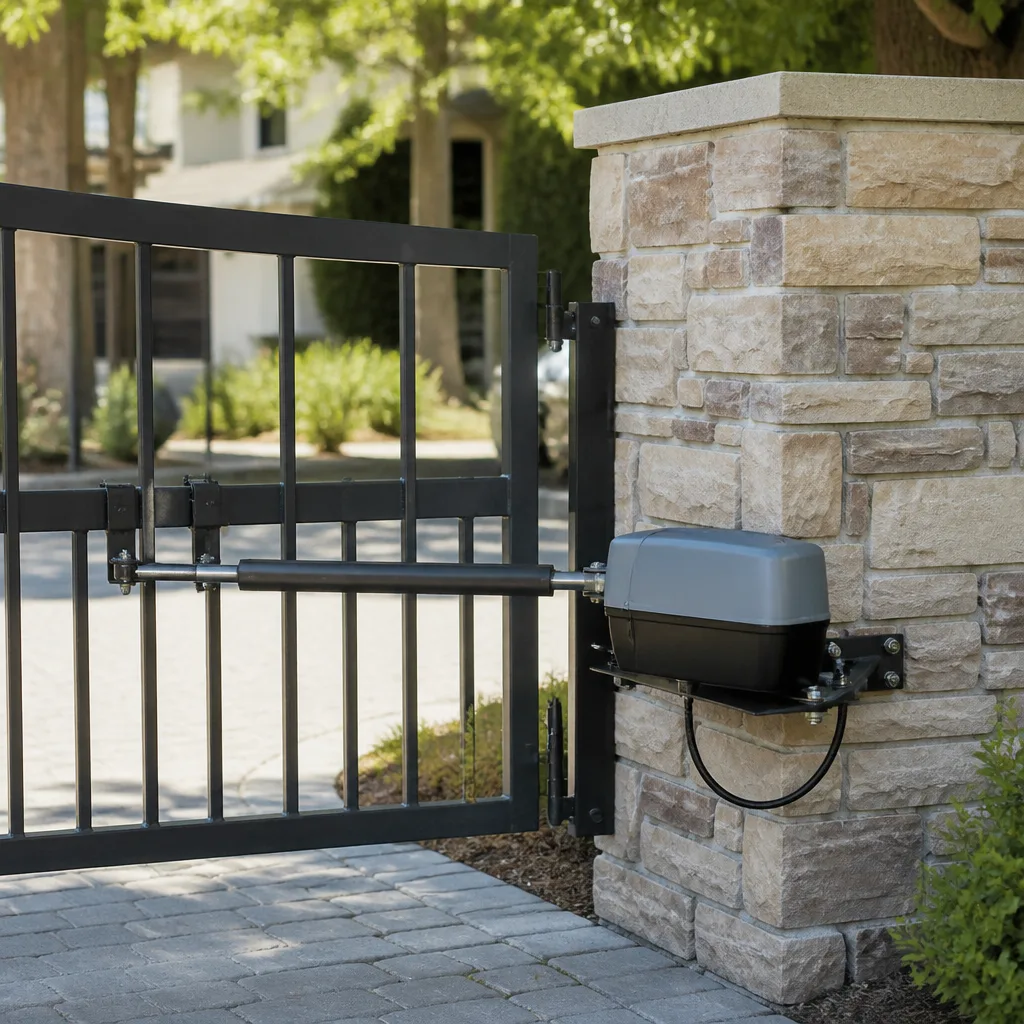 LiftMaster operators
Free on-site gate assessment - hinges, posts, and your LiftMaster or Nice gate operator checked before anything is quoted
The assessment is free and the quote is the invoice.
Get your free estimateGate Repair Maintenance Schedule: What to Do and When
Here’s a mistake we see every winter in Denver: a homeowner lubricates the gate operator chain in January, and by March the chain is packed with grit and running stiffer than it did in the fall. Most petroleum-based lubricants thicken below 20°F, and a thick lubricant is a grit magnet. The right lubricant in the wrong month does more damage than skipping the task entirely. That’s because gate maintenance isn’t one job on a repeating calendar. It’s four distinct service types tied to Denver’s seasonal stress points, and mixing them up is why so many gates fail years before they should. This guide maps what to do, when, and why the timing is mechanical rather than arbitrary.
Quick Answer
Gate maintenance in Denver splits into four tracks: lubrication of moving parts, cleaning of sensors and photo eyes, calibration of travel limits and force settings, and inspection of wear items like hinges, rollers, and chains. Each runs on its own frequency, and each maps to a Colorado season rather than a random date. Pre-freeze battery and control board checks belong in October, hinge and roller inspection belongs after spring heave in April, and a wiring audit of UV-exposed runs belongs in August when the high-country sun has done a full season of damage.
Styles & brands we work with
- Wrought iron
- Wood & steel frame
- Farm & ranch
- Sliding driveway gates
- LiftMaster operators
Table of Contents
- The Four Kinds of Gate Maintenance (and Why They’re Not the Same Job)
- The Denver Seasonal Map: What to Do Each Month
- Lubrication: The Right Product at the Right Temperature
- Cleaning Sensors and Photo Eyes
- Calibration: Limits, Force Settings, and Why They Drift
- Measuring Wear Before It Fails
- What You Can Do Yourself vs. What Needs a Technician
- Building a Maintenance Log That Any Technician Can Use
The Four Kinds of Gate Maintenance (and Why They’re Not the Same Job)
Most gate problems that look sudden aren’t sudden. They’re the result of one of these four tracks being skipped for a season. Treating them as one task on one calendar is the root of it.
- Lubrication covers chains, hinges, rollers, and pivot points. It’s temperature-sensitive and grit-sensitive. More isn’t better, and the wrong product in the wrong month is worse than nothing.
- Cleaning covers photo eyes, sensor lenses, track surfaces, and the optical path of the safety beam. It’s frequency work, not skill work: it needs to happen often, and it takes ten minutes when you know where to look.
- Calibration covers travel limits, soft-start and soft-stop behavior, and the force setting the operator uses to stop or reverse on obstruction. This is the track that decides whether a gate reverses on a child’s bike or doesn’t. It changes with temperature, hinge wear, and anything that adds friction to the travel path.
- Inspection covers chains, hinges, wheels, and the concrete pad itself. It’s measurement work. You’re measuring wear so you can schedule replacement three months out rather than waiting for the gate to stop.
Each of these needs different tools and different frequencies. Calling a technician for lubrication you could do yourself wastes a service visit. Guessing at a force setting when you should call is the other error, and it’s the one with liability attached. In our experience across the Denver area, the gates that last well past a decade are almost never the ones with the most maintenance hours spent on them. They’re the ones where the four tracks were kept separate and each got done at the right time.
The Denver Seasonal Map: What to Do Each Month
Denver’s climate does specific things to a gate: freeze-thaw cycles that heave concrete and work fasteners loose, dry summer heat that bakes wire insulation, and a spring wind season that loads panels. The schedule below is anchored to those, not to a generic calendar. Where it conflicts with your operator’s manual, the manual’s interval wins for that component; the seasonal timing is what your manual can’t tell you.
- October: pre-freeze check. Test the battery and the control board before the first hard freeze. Battery capacity falls with temperature, and a marginal battery that runs the gate in September will leave it dead in a December cold snap. Check that the control enclosure seals properly and that no water is pooling near the operator.
- November: lubricate, then leave it. This is the last sensible lubricant application of the year. Apply a product rated for low temperature, wipe off excess, and stop. Do not reapply in January because the chain “looks dry.”
- March: hinge inspection, after heave. The month after the last sustained freeze is when concrete movement is done and fastener loosening is visible. Check gate hinges, post anchors, and the pad. Look for gaps at the post base and for hinge play you can feel by hand.
- April: rollers, wheels, and full mechanical inspection. Rollers and wheels take the most mechanical punishment through freeze-thaw. Measure groove depth and inspect for flat spots.
- May: calibration pass. With bearings freshly checked and temperatures rising, this is the right time to verify travel limits and confirm the force setting is still where it should be.
- July: photo eye alignment and path clearance. Sun angle changes, vegetation grows, and a photo eye that was aligned in winter may be looking into a shrub.
- August: wiring audit. This is the month to inspect UV-exposed wiring runs, conduits, and connections. Denver’s high-altitude sun degrades insulation faster than most people expect.
- September: full cycle count and log review. Compare current settings to the baseline in your log. Note wear measurements against last year’s. This is where you spot a trend before it becomes a service call.
If your gate has a Linear or Viking operator that’s been running for more than a few years, the October and August items are the two to protect first. Power and control board issues on those systems are far more often seasonal than they are sudden.
Lubrication: The Right Product at the Right Temperature
Lubricant choice in a Denver climate has to account for a genuine swing: a January morning below 20°F and a July afternoon above 90°F. Most general-purpose petroleum lubricants thicken in the cold and attract and hold grit. A thick, grit-laden lubricant on a chain or a hinge acts like an abrasive paste, and it works into the very clearances you’re trying to protect.
The practical rules look like this:
- Use a lubricant rated for the low end of your actual winter range, and one that stays put rather than running off in heat.
- Apply sparingly. Excess lubricant is a grit trap, and a thin film on the wear surface does the job.
- Wipe off the excess after application. What’s left on the outside of the chain is not helping; it’s collecting.
- Never lubricate roller or wheel tracks. Those run on wheels, not on grease. Track lubrication attracts grit and accelerates wheel wear.
- Treat November as your last application before deep winter and May as your first after. A cold-weather reapplication in January or February, on a chain that already has product on it, does not help.
Hinges on a manual swing gate take a different approach from an operator chain. Hinges are load-bearing and low-speed; they want a lubricant that stays where it’s placed rather than one that migrates. Chain and pivot points on a powered system want something formulated for the operating temperature. If you own a Ghost Controls system and you’re not sure what your operator’s manual recommends, follow the manual for the product and the above rules for timing.
Cleaning Sensors and Photo Eyes
Photo eyes are the single most common cause of a gate that “randomly” reverses, stops mid-travel, or refuses to close. They’re also the easiest thing on the whole system to maintain. A dirty lens, a spider web across the beam path, or a leaf caught against a receiver will mimic an obstruction. From the control board’s point of view, a blocked beam and a real obstruction look identical.
Cleaning is a routine, not a skill. Wipe the face of each photo eye with a soft cloth, clear any vegetation from the beam path, and check that the mounting brackets haven’t been knocked out of alignment. Point both eyes at each other along the same line. Then test by walking through the beam while the gate is closing: the gate should reverse or stop.
Frequency matters more than technique here. In Denver, dust, pollen, and spring grit make sensor cleaning a monthly item during the growing season, and a post-storm check is worthwhile any time significant debris has moved through. The operator’s diagnostic LEDs on many DoorKing systems will indicate beam status directly, which makes a quick visual check easy between cleanings.
One caveat on safety equipment: never disable a photo eye to “make the gate work” while you wait to fix the real problem. The beam is the part of the access control system that protects people, and a gate that closes on a cleared beam is an unsafe gate.
Calibration: Limits, Force Settings, and Why They Drift
Travel limits and force settings are the two calibration items on any powered gate, and both drift for the same reason: the physical resistance of the gate changes over time. A hinge that’s worn, a wheel with a flat spot, a gate that’s settled a few millimeters on its post, and cold stiff grease all increase the force needed to move the gate. The operator senses that as more load. If the force setting was tuned when the gate was new and nothing has been recalibrated since, you’re running with a setting that no longer matches the gate.
That matters in both directions:
- Too permissive: the gate keeps pushing through an obstruction instead of reversing. This is the dangerous failure mode.
- Too tight: the gate trips on normal resistance, reversing or stalling for no apparent reason. This is the annoying failure mode, and it’s the one people try to fix by increasing the force rather than addressing the underlying friction.
Correct calibration addresses friction first, then re-tunes the force setting. Travel limits should be re-verified whenever the gate’s physical position has changed: after a post settles, after a hinge is replaced, or after any adjustment to the gate leaf itself.
Calibration is one of the tasks we’d genuinely rather you didn’t attempt on a powered gate. Force setting work directly determines whether the gate stops on contact, and the liability sits with whoever set it. It also varies by manufacturer: the procedure on a FAAC operator is not the procedure on a LiftMaster or a Ghost Controls unit. If your gate is moving and the force setting is the question, a technician can measure it, set it, and document the result.
Measuring Wear Before It Fails
This is the part of maintenance that most schedules leave out, and it’s the part that saves the most money. Wear items don’t fail without warning. They fail after a measurable period of measurable wear. If you take measurements once a year and write them down, you can see which items have roughly 90 days left and replace them on your schedule instead of an emergency call.
Three measurements cover most of it:
- Chain stretch: a chain that has stretched beyond its adjustment range will begin to jump sprockets or run loose. Measure across a defined span of links and compare to the same measurement taken a year ago. A chain that’s stretched noticeably in twelve months is closer to replacement than a chain with no measurable change across two years.
- Hinge play: with the gate at rest, push and pull the gate leaf against the hinge. Some movement is normal. Movement you can feel as a distinct knock, or that has grown since last year’s check, is a hinge that’s heading toward replacement. Hinge play on a swing gate also changes the gate’s hanging position, which changes the force required to move it.
- Wheel groove depth: on a slide gate, the wheel that runs the gate has a groove that deepens as it wears. Compare the groove depth on all wheels. Uneven wear is worth investigating on its own, because it usually means the gate isn’t riding level on its track.
Trend beats absolute value. Two measurements a year apart tell you more than any single reading. When you have a trend, you can budget for a replacement roughly three months out and take care of it on a normal service call rather than calling in a failed gate.
What You Can Do Yourself vs. What Needs a Technician
There’s a real split here, and it isn’t about skill. It’s about voltage, liability, and warranty terms. Get it wrong in the wrong direction and you either pay for work you could’ve done or you put yourself in front of something dangerous.
Genuinely owner-serviceable:
- Cleaning photo eyes and sensor lenses
- Clearing vegetation and debris from the gate path and beam line
- Testing the safety reversal function
- Taking visual readings and writing them into a maintenance log
- Recording cycle counts and comparing settings across time
Work for a gate technician:
- Any task that puts you in contact with line voltage. This includes the power run, the operator’s internal wiring, and anything behind the control enclosure cover.
- Force setting calibration, because it directly determines whether the gate stops on contact and the responsibility for that setting belongs with the person who set it.
- Control board work, battery replacement on a live system, and operator wiring changes.
- Replacing a hinge, a wheel, or a chain on a gate that could move or fall. A heavy gate panel can crush, and a slide gate that comes off its track under load is the other serious risk on this trade. Both need trained hands and the gate secured first.
There’s also a warranty dimension. Many operators will have conditions on how and by whom adjustments are made. Before you open an enclosure, check what your operator’s documentation says about who should service it. If in doubt, a call is cheaper than a replacement board.
Building a Maintenance Log That Any Technician Can Use
The single most useful thing you can do for your gate is to keep a log of baseline settings. Not for you: for whoever services it next. A technician with a written baseline can diagnose in a fraction of the time it takes to figure out what “normal” looked like on your gate from scratch. That time saving matters most when the original installer isn’t the one showing up.
Build the log once, and update it on every visit:
- Identify the operator. Brand and model name, and the date the system was installed if you know it. If the system came with the property, take a photo of the data plate inside the operator housing. This is how a technician knows which of the major brands they’re dealing with, and it’s what lets them bring the right parts on the first visit.
- Record baseline settings. Travel limits, force setting, and open and close time. Write the numbers, not “adjusted.”
- Record measurements. Chain stretch span, hinge play, wheel groove depth. Date each reading. Two consecutive readings in the same units are worth more than any single one.
- Note what was replaced, when, and with what part. A hinge replaced in April is useful information when force settings get recalibrated in May.
- Note anything that changed on site. A new fence, a hedge planted across the beam line, a driveway resurfaced so the gate has to clear a different grade. All of these change how the gate operates.
Keep the log where the next technician will look for it, and tell them it exists. The log also serves you: a gate with a documented maintenance history and baseline settings is easier to keep in service, and easier to diagnose from gate repair records when something does go wrong.
Common Mistakes to Avoid
- Lubricating in the wrong month. A January application on a chain that already has product on it accelerates wear in Denver temperatures. The right product in the wrong month is worse than none.
- Increasing force to stop a gate from tripping. Force settings rise for a reason: friction went up somewhere. Raising the setting hides the friction instead of fixing it, and it raises the risk that the gate won’t stop on contact.
- Running the operator without a battery check before the first freeze. A marginal battery works in mild weather and fails in cold. Check it in October and replace it before it fails, not after.
- Disabling a photo eye to stop the gate from reversing. A blocked beam and a real obstruction look the same to the control board. Fix the beam, and never bypass it.
- Lubricating slide gate tracks. The gate runs on wheels; the track doesn’t want grease. Grease on the track collects grit and wears the wheels faster.
- Ignoring concrete movement after the freeze season. A post that has heaved slightly changes the gate hanging position, which changes the load on the operator, which changes the force setting. Look at the pad in March.
- Servicing the gate without a written baseline. Without a record of settings, neither you nor a technician can tell what changed. The log is most of the value of a maintenance schedule.
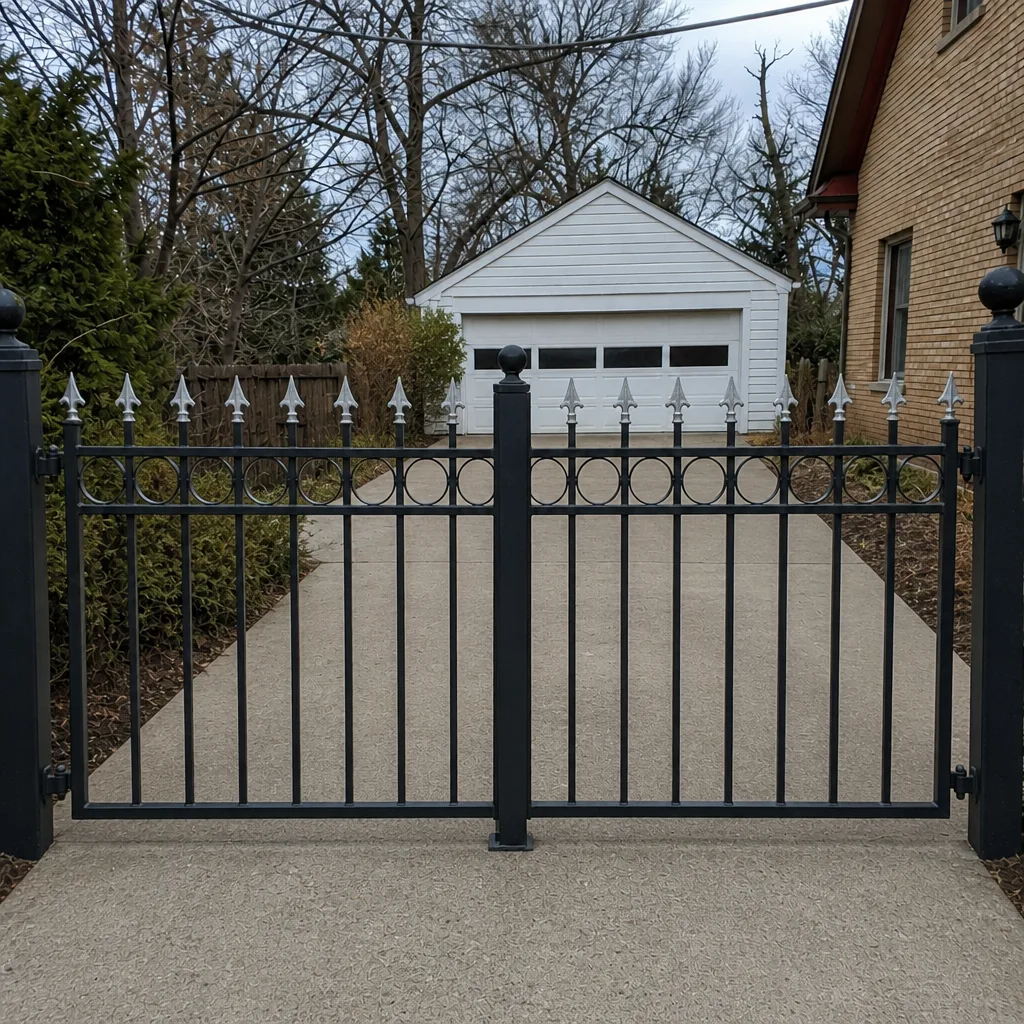
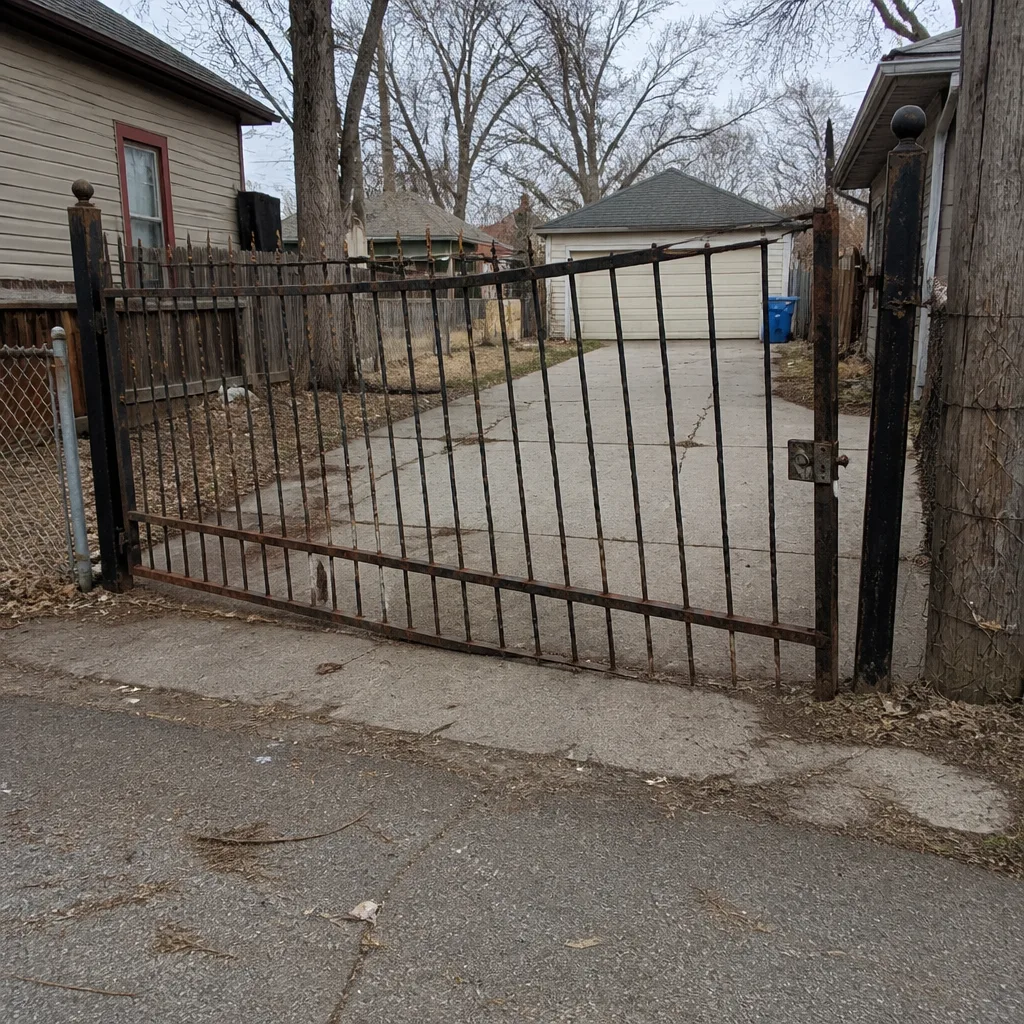
See the difference
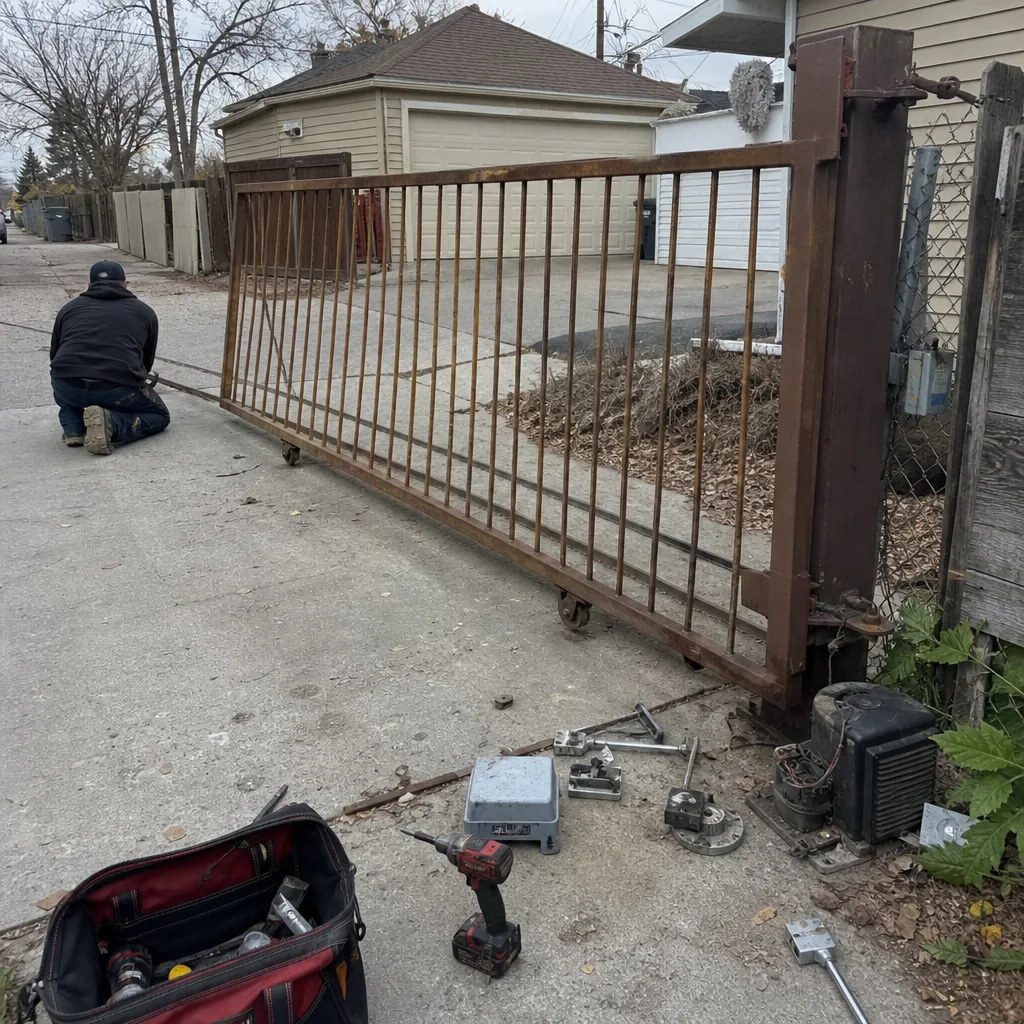 Before
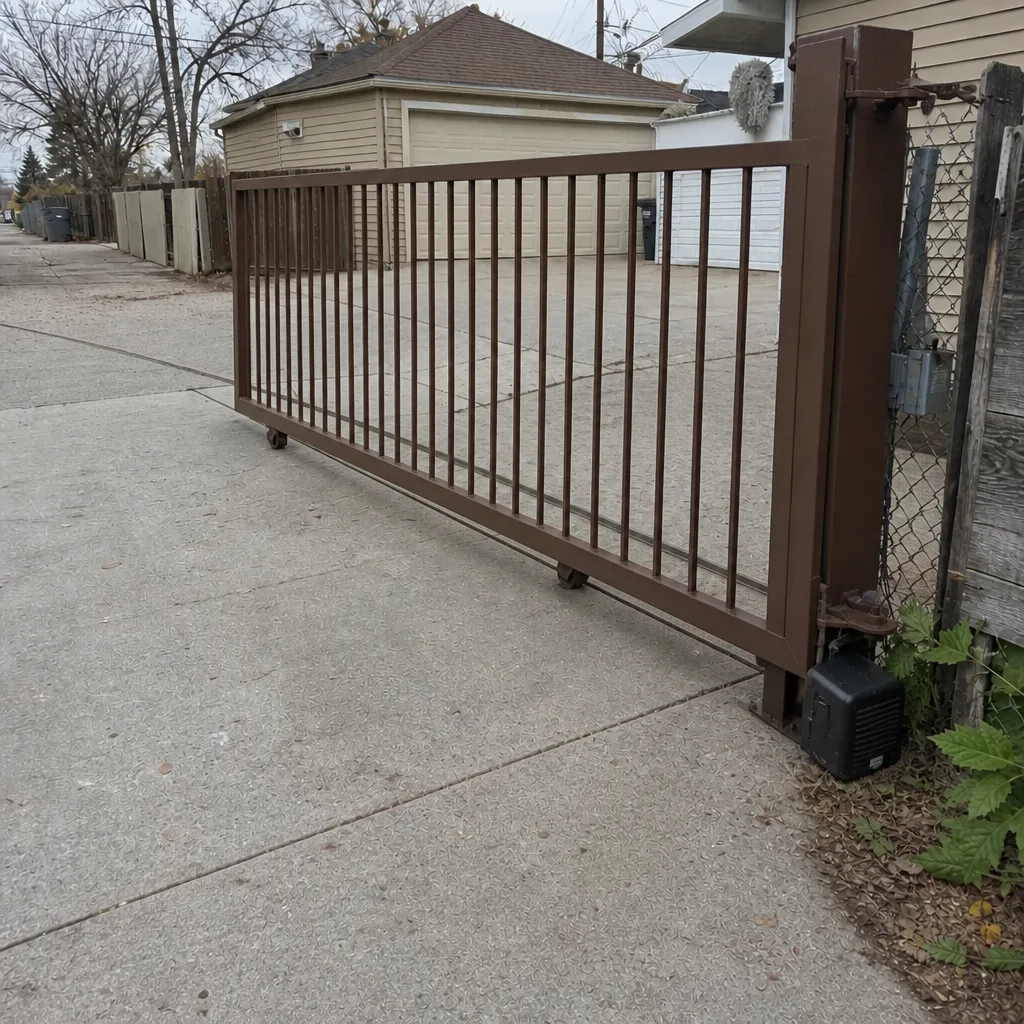 After
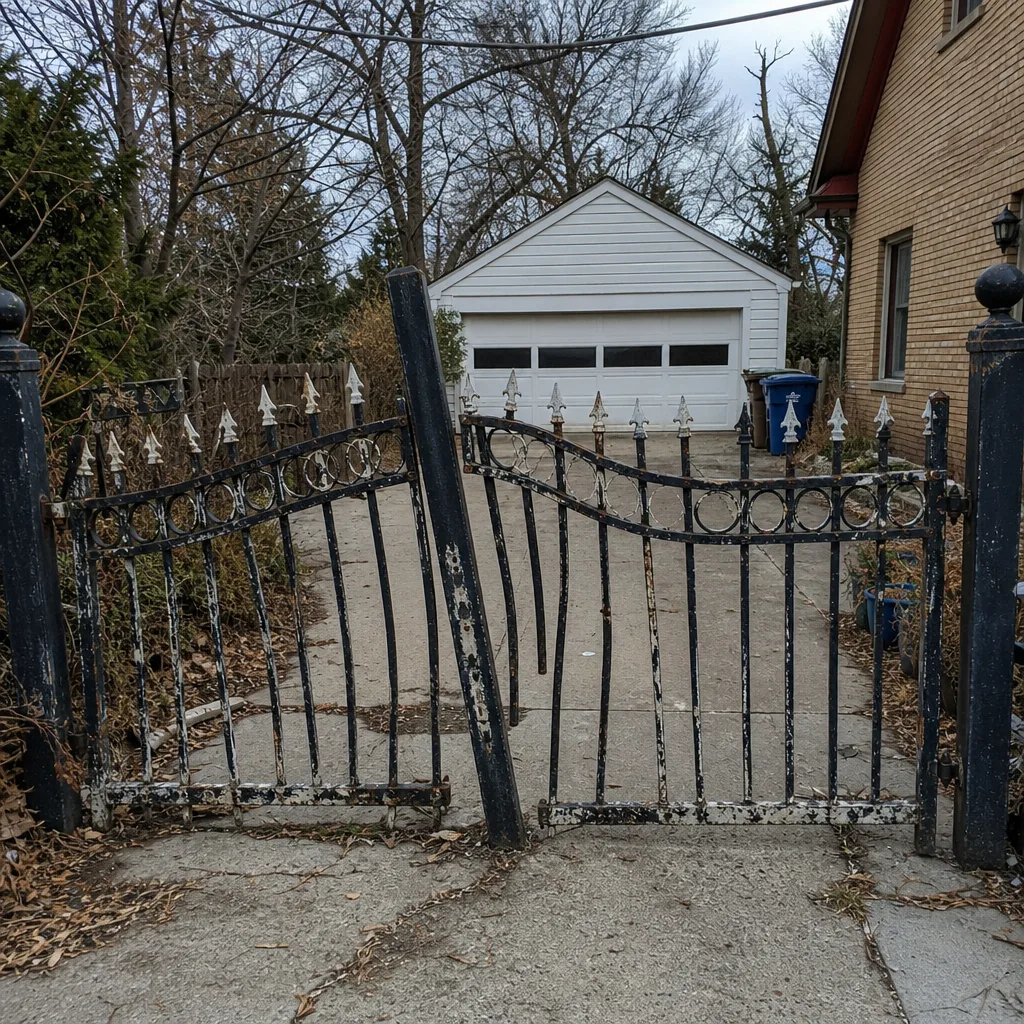 Before
 After
 Before
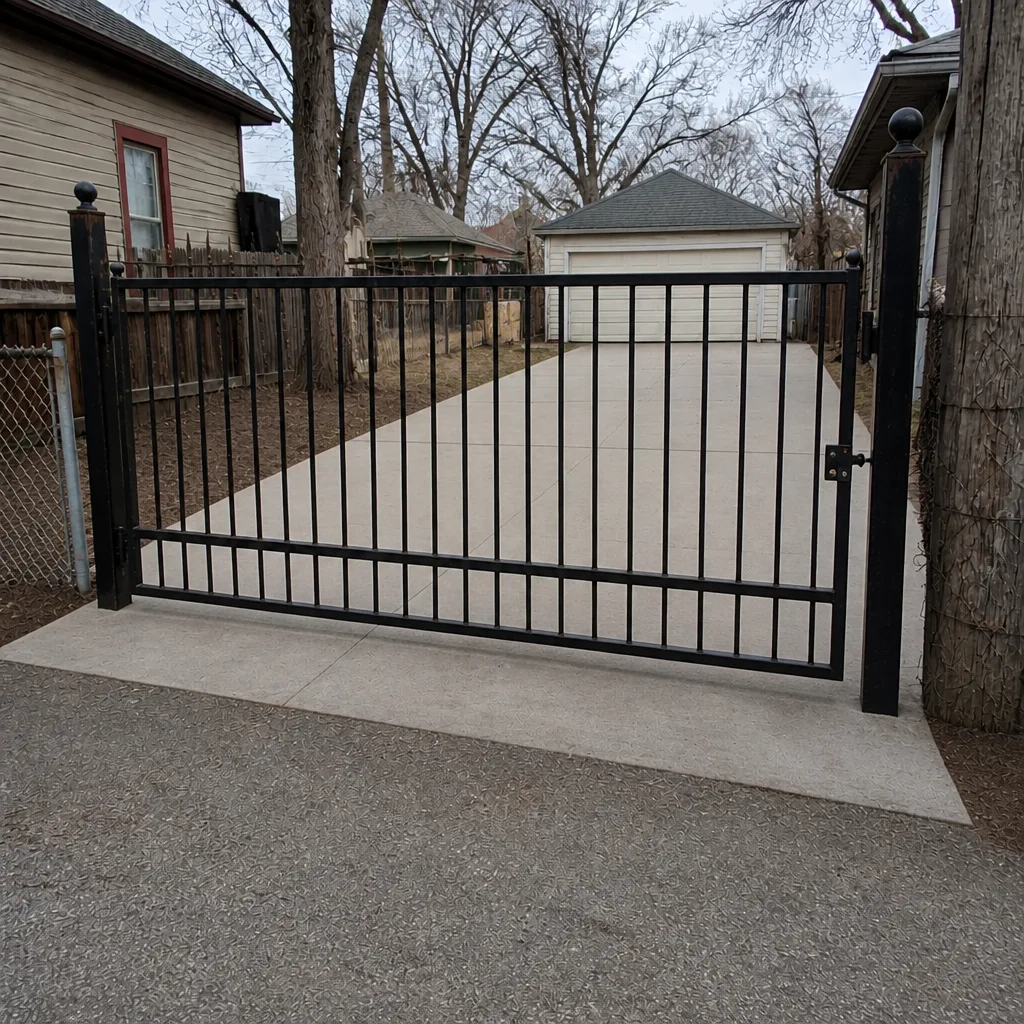 After
When to Call a Professional
Call a gate technician when the gate stops responding to the operator, when its motion changes noticeably (slower, faster, stopping at a different point), when a photo eye won’t clear after cleaning, or when a hinge or wheel is showing measurable wear. Call immediately if a slide gate has come off its track or a heavy gate panel is loose on its post. Call if you smell burning from the control enclosure or find water inside it. And call for anything involving line voltage, force settings, or control board work; those aren’t owner tasks and the liability is real.
Gate Repair Denver offers free estimates in Denver. We answer the phone and diagnose the problem instead of guessing at it. Call (855) 677-8291. We answer 24/7. Fast dispatch from 7am to 7pm, Sunday through Friday.
Frequently Asked Questions
Once a year as a full inspection, with owner-side cleaning and checking on a monthly to quarterly basis. The full inspection should cover bearings, hinges, wheels, and calibration; the monthly routine is sensor cleaning and a visual check of the beam path. Denver’s freeze-thaw cycle adds two seasonal touchpoints to that schedule: a pre-freeze check in October and a post-heave mechanical inspection in April.
Yes, for the chain and hinges, using a low-temperature-rated product applied sparingly and wiped after. Do not lubricate slide gate tracks or wheel groove surfaces. If you own an operator system and you’re not sure of the product specification, follow the manufacturer’s manual for that model. What you should not do is reapply lubricant mid-winter on a chain that already has product on it.
Usually a dirty or misaligned photo eye, or a force setting that’s now too tight for the gate’s changed resistance. Clean the beam path and check alignment first. If the reverse persists after cleaning, the force setting or the physical resistance of the gate has changed, and both need a technician. We can diagnose it and get the right setting back: call (855) 677-8291.
An inspection of hinges, rollers, wheels, and the track; a chain check with measured stretch; a photo eye alignment and function test; a travel limit and force setting verification; and a wiring and enclosure inspection. What we don’t do is replace parts that don’t need replacing. The price for the visit is set by a written estimate before any work starts.
Yes. The freeze-thaw cycle moves concrete and works fasteners loose, so post-heave inspection in April is not arbitrary timing. Cold weather thickens lubricant and cuts battery capacity, which puts the pre-freeze check in October. And the high-altitude sun degrades exposed wire insulation at a rate you won’t see in lower elevations, which is why the UV wiring audit belongs in August.
When the measurement trend tells you. A chain stretched noticeably in one year, or a hinge with knock-level play that’s grown since the last reading, is due for replacement. The point of measuring is to schedule the replacement roughly three months out, usually on a normal visit, before either fails.
The Bottom Line
Gate maintenance works when you stop treating it as a single task on a repeating calendar and treat it as four tracks: lubrication, cleaning, calibration, and inspection. On a Denver gate, each track has a season that makes mechanical sense. October protects the battery and board. November is your last lubricant pass. April’s hinge inspection follows the heave. August is the wiring audit. September is for reading the log and seeing trends. Calibration, line voltage work, and replacing heavy components belong with a technician, and everything else belongs with you, written down so the next person can read it.
Our team works on the brand you already own, including Linear, Viking, Ghost Controls, and DoorKing systems, plus the rest of the major operator brands. Our focus is on gate work: repair, electric gate repair, and installation. Call (855) 677-8291 for a free estimate. We answer 24/7. Fast dispatch from 7am to 7pm, Sunday through Friday. Written by the team at Gate Repair Denver, serving Denver since 2015.